‘Just me and the wreck’ — a deep dive into the art of breath-hold diver Kenny Martin

Listen to the episode

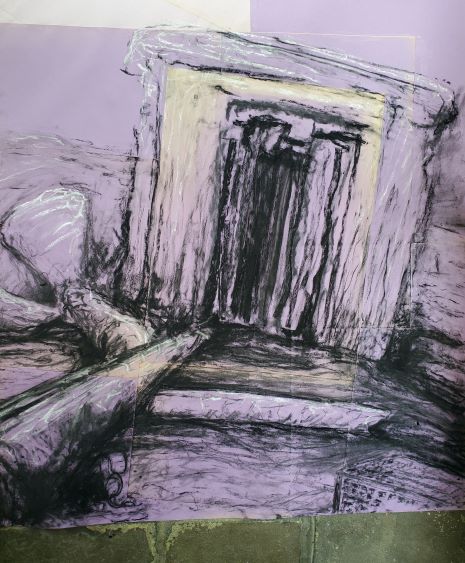
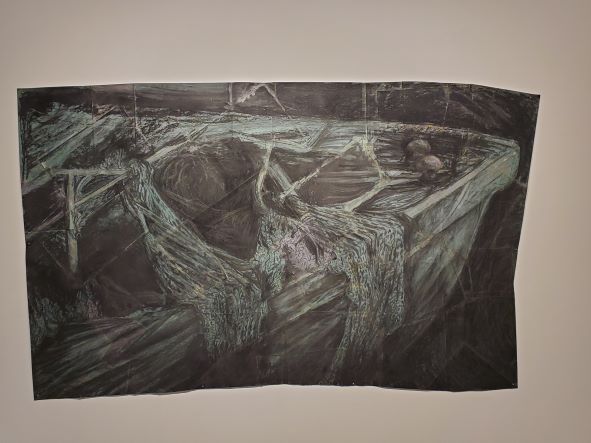
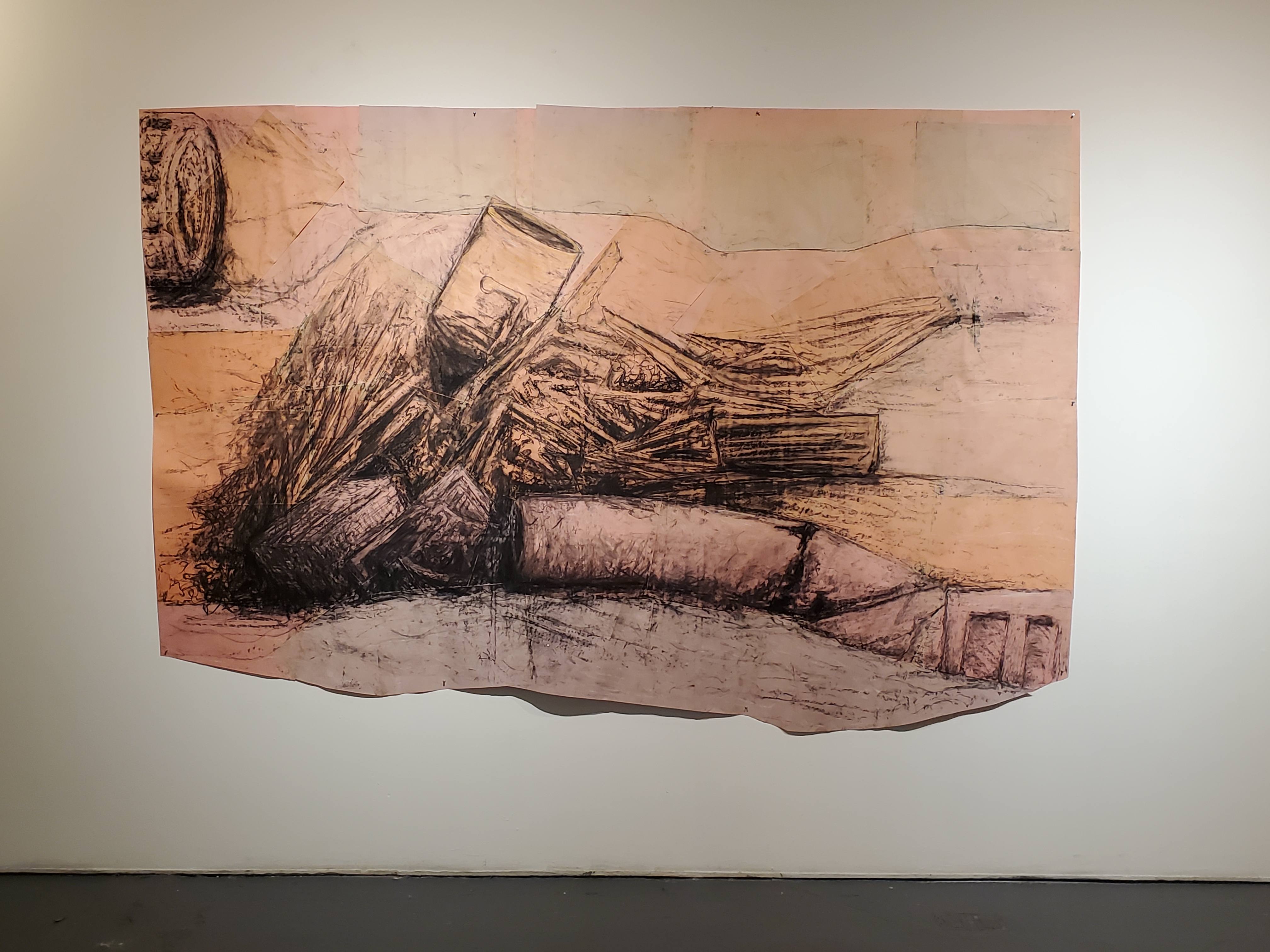
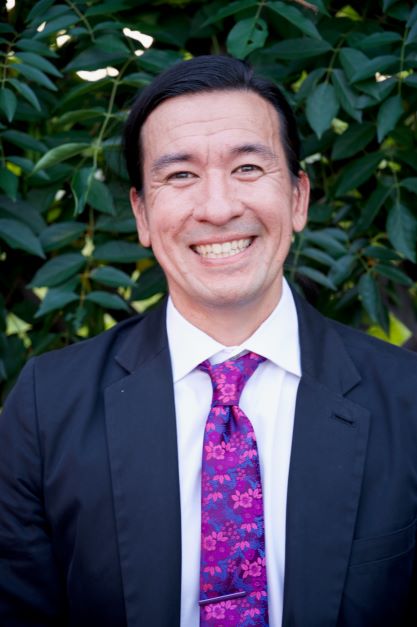
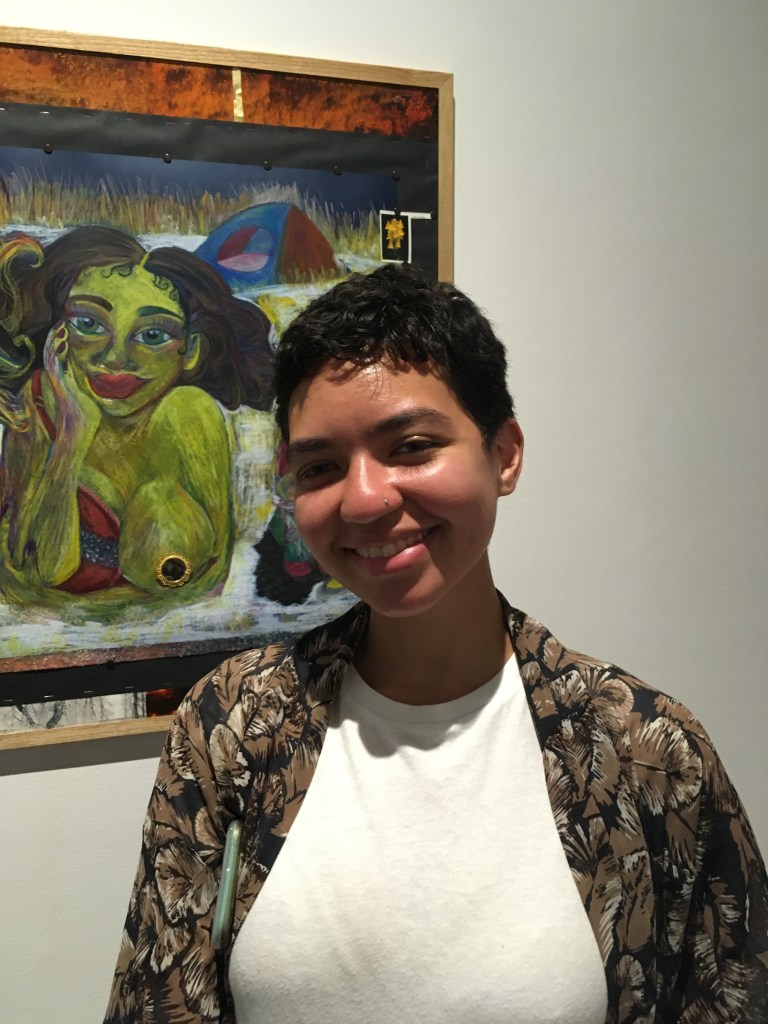
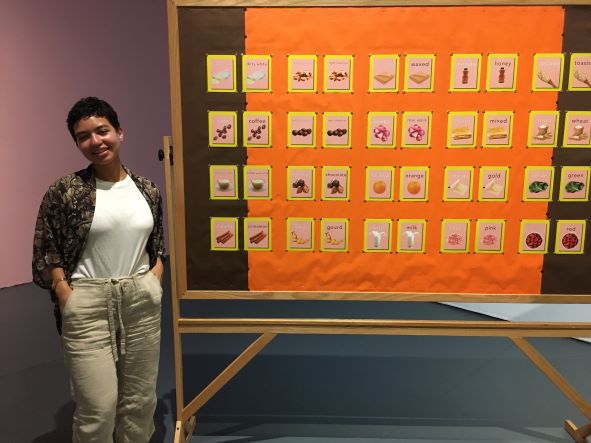
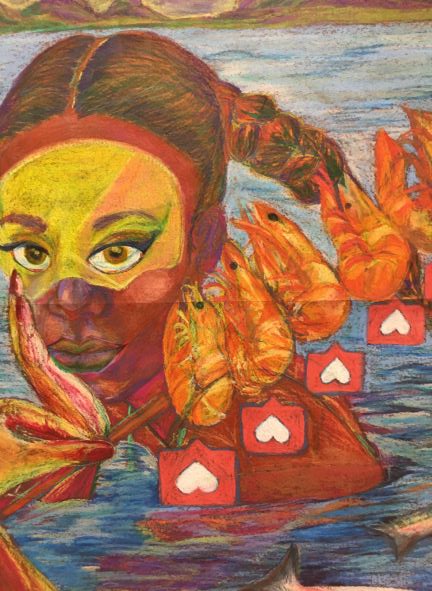
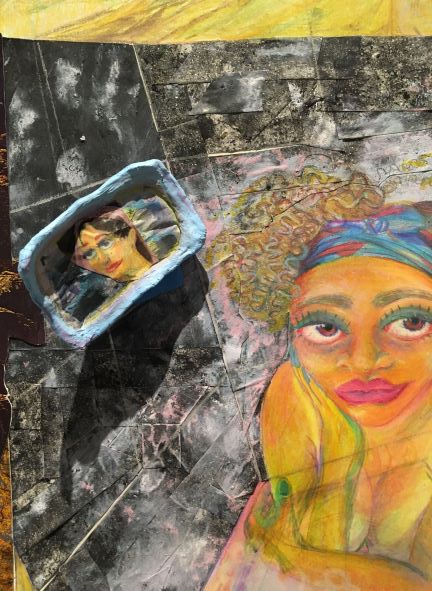
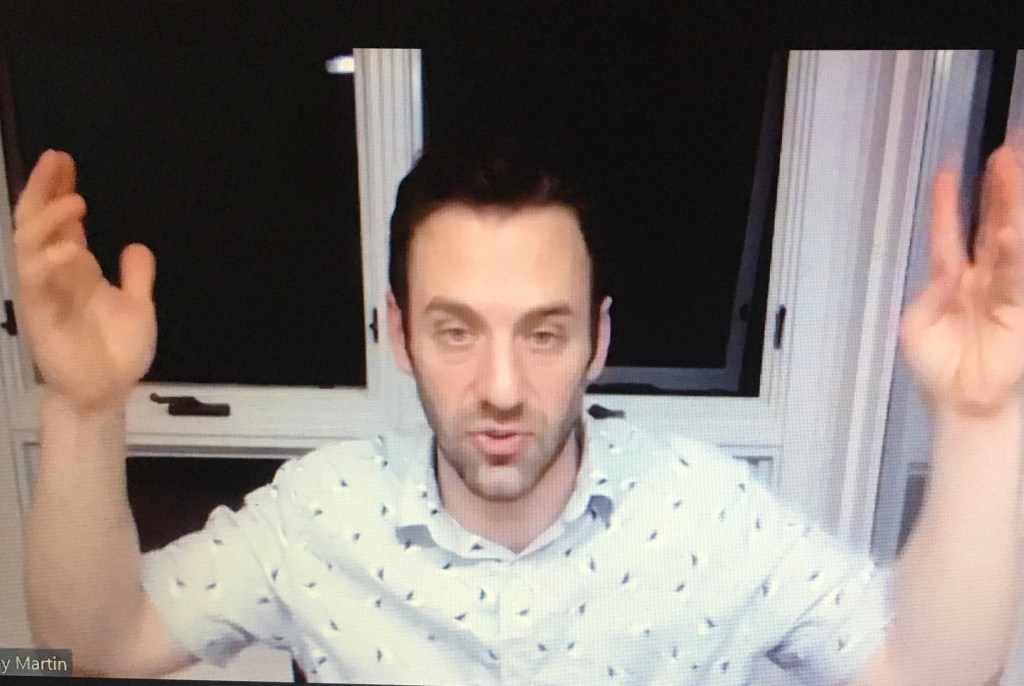
Today, we talk with Kenny Martin, a teacher and artist who lives on the edge. Not only do his high school students wield blowtorches to do metalwork, but Kenny’s hobby is undersea diving – while holding his breath. An exhibit of his drawings based on his breath holding free dives is up now at Real Art Ways in Hartford. Oh, and Kenny’s also been a boxer, and most recently founded a Fight Club for teens; he’s convincing in making it sound therapeutic. Back when Kenny taught elementary school, he had his students bury tuna carcasses, a lesson in composting. So do I need to tell you Kenny’s an interesting guy? He says he also gives a great haircut.  This is the interview that convinced me I need to have more people from Brooklyn in my life. And btw, where else are you going to find conversations like this but on WESU? Please, during this fall/winter pledge drive, do your part to support community radio by going to wesufm.org/pledge and giving what you can. Or I’ll have Kenny punch you in the nose.
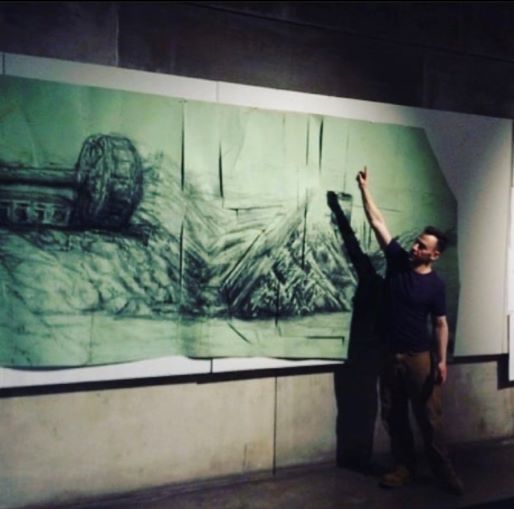
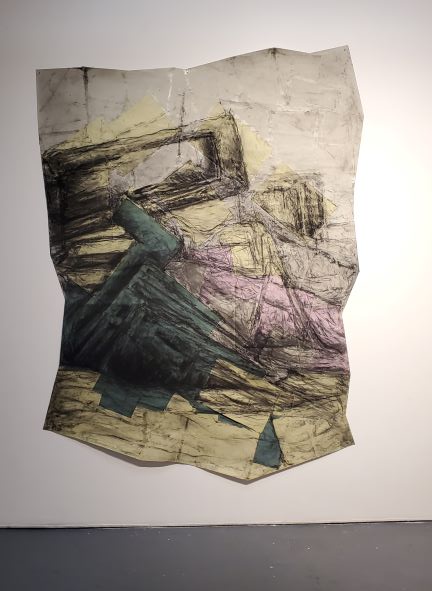
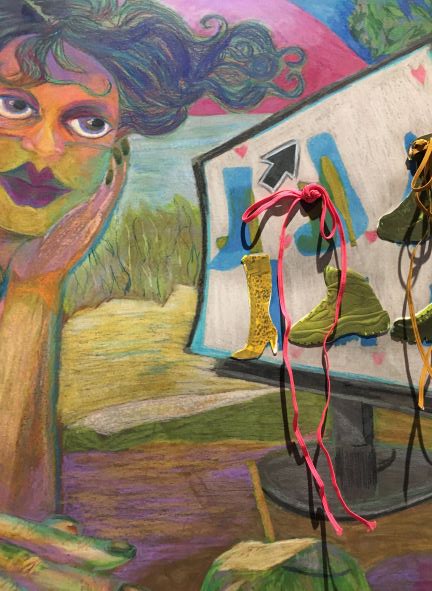
Upper left, Ken with the first of his breath-hold-dive drawings, done from memory for artist Peter Waite’s “Monster Drawing” class in Wesleyan’s Graduate Liberal Study Program several years ago.

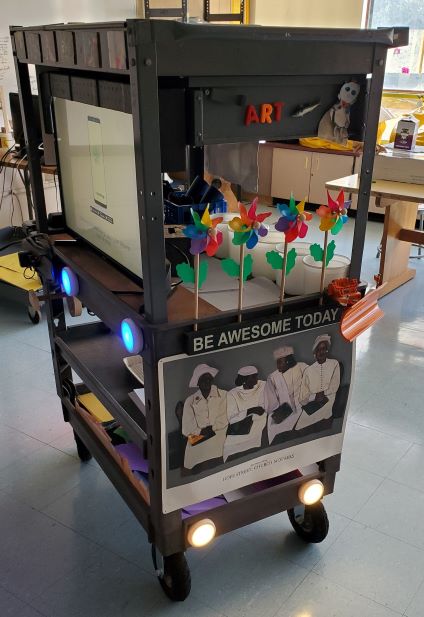
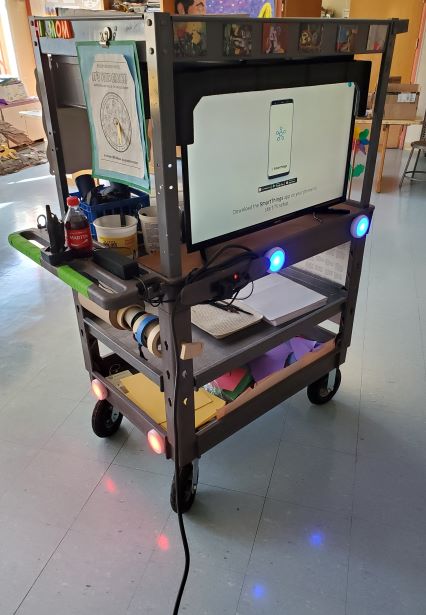
Below, two views of the art cart Ken, then a K-5 teacher, created when he lost his classroom. It was paid for in part with crowd-funding.
In Search of ‘The Creep Factor’

Listen to the episode

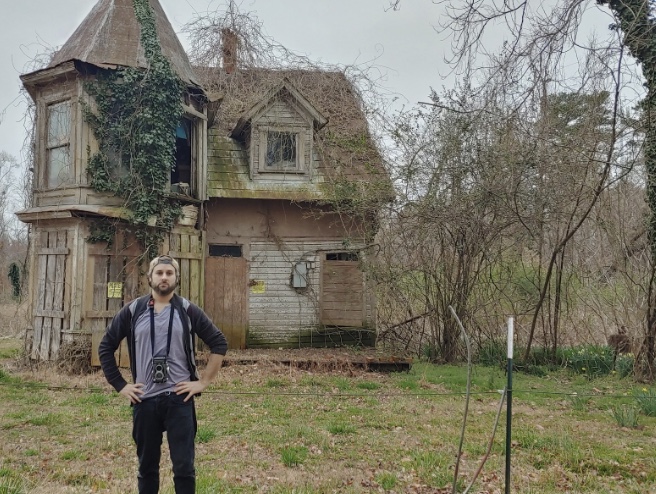
Today we talk with photographer Bryan Sansivero, whose work has been described in The New York Times as creepy, sad, and beautiful. He travels widely looking for abandoned houses to shoot inside and out. His short documentary, “Shadows of Kings Park,” about a closed up mental institution, can be found on YouTube, and his book, American Decay, is in its second edition. You can find him on Instagram @st.severus and his website.

She goes big when she goes to Rome: the grande art of Kristin Jones

Listen to the episode

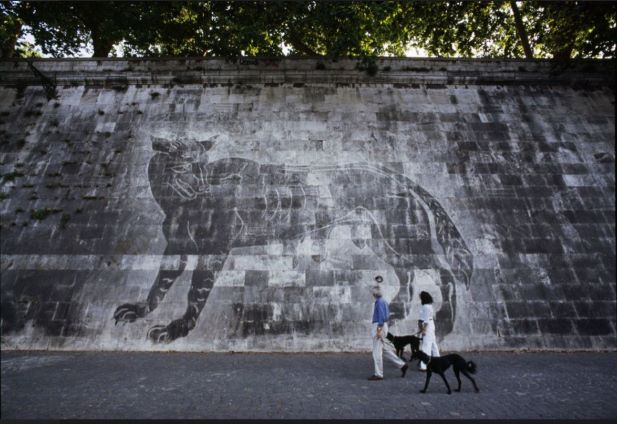
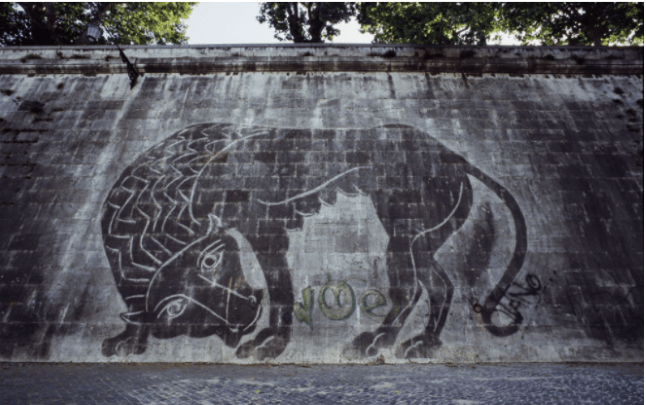
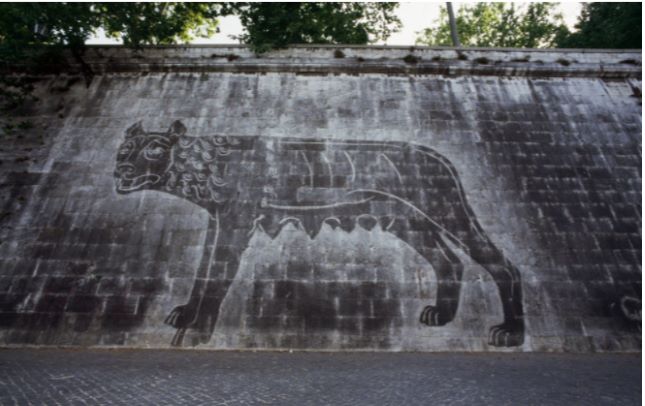
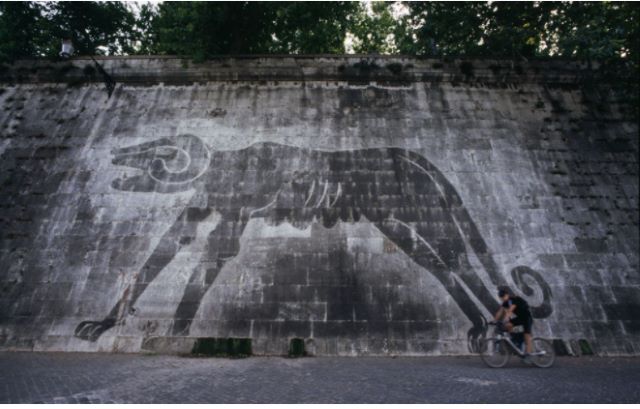
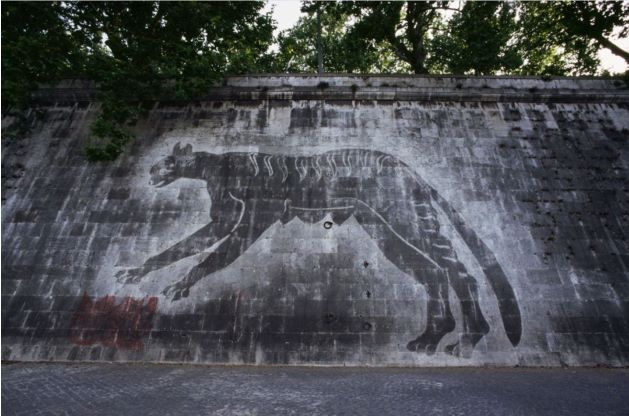
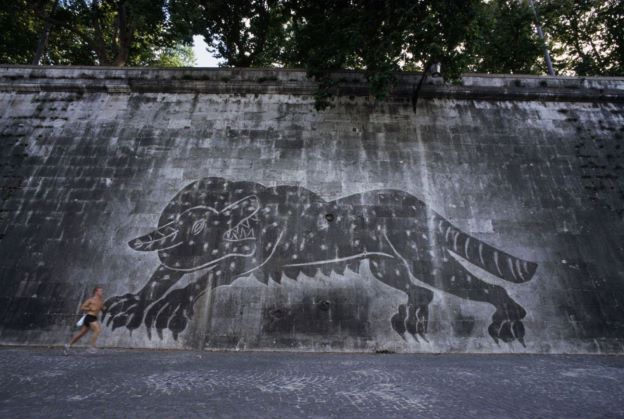
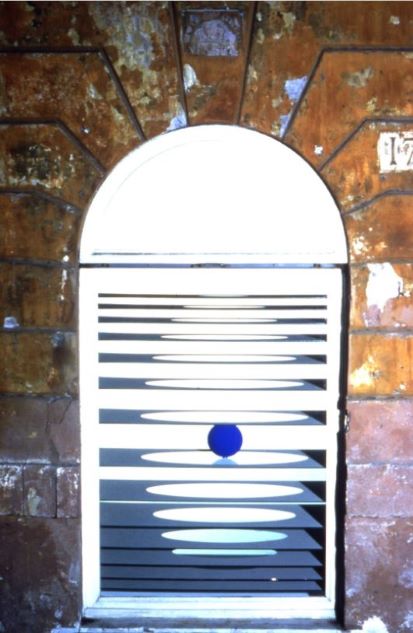
Inspired by Christo while in college, Kristin Jones enlisted the help of an army of volunteers to “draw” a parade of she wolves, the emblem of Rome, by powerwashing away biological growth from the walls of the Tiber River. Her hope is to someday animate the procession from her archive of more than 90 drawings. In our visit, she talks about that project; another in Rome, her first there, created from dust; and others, including some in New York City, where she lives. As much as she’s interested in such cosmic subjects as the fluidity of light and the continuum of time, she’d like us to know that, using her years of experience as an architecture model maker, she also work on a miniature scale. Often working collaboratively, her mission is to “render the invisible visible and awaken a sense of wonder.” You can explore her oevre at kristinandreajones.com and eternaltiber.net.

Some of the she wolves, now disappeared from the walls of the Tiber. Jones is interested in transience and in work that “cannot be owned.”.
Jones’s first installation in Rome, made by engineering the accumulation of dust on glass shelves.
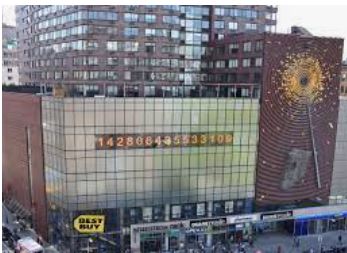
A project in NYC’s Union Square; the digital numbers have been updated to refer to climate change.
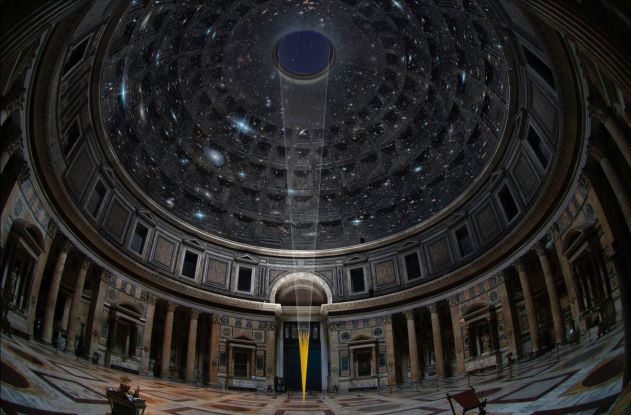
Looking to the future: Jones hopes to create an installation involving Rome’s Pantheon.

A 2011 New York Times article about “persistent public artist” Jones and her Washington Square digital project honoring an almost 350-year-old tree known as Hangman’s Elm.

Q is for Quoin: Teaching architecture to kids

Listen to the episode

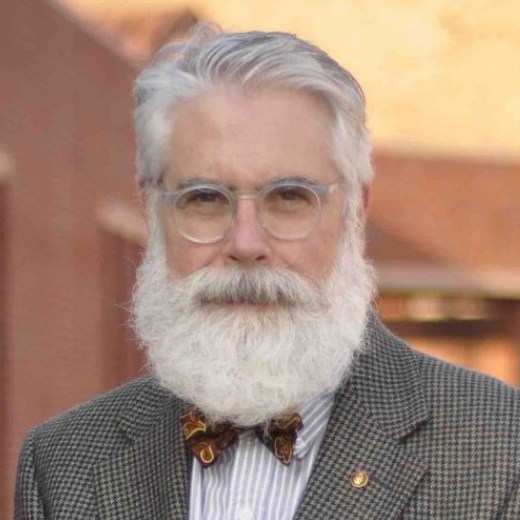
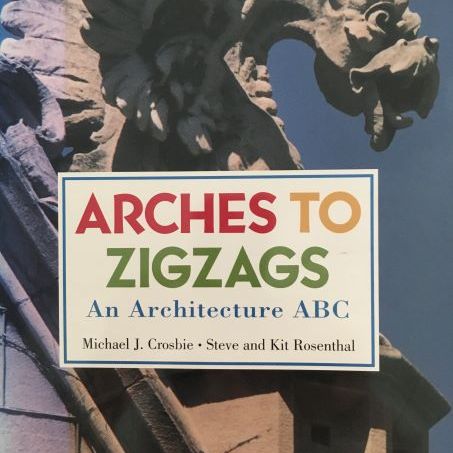
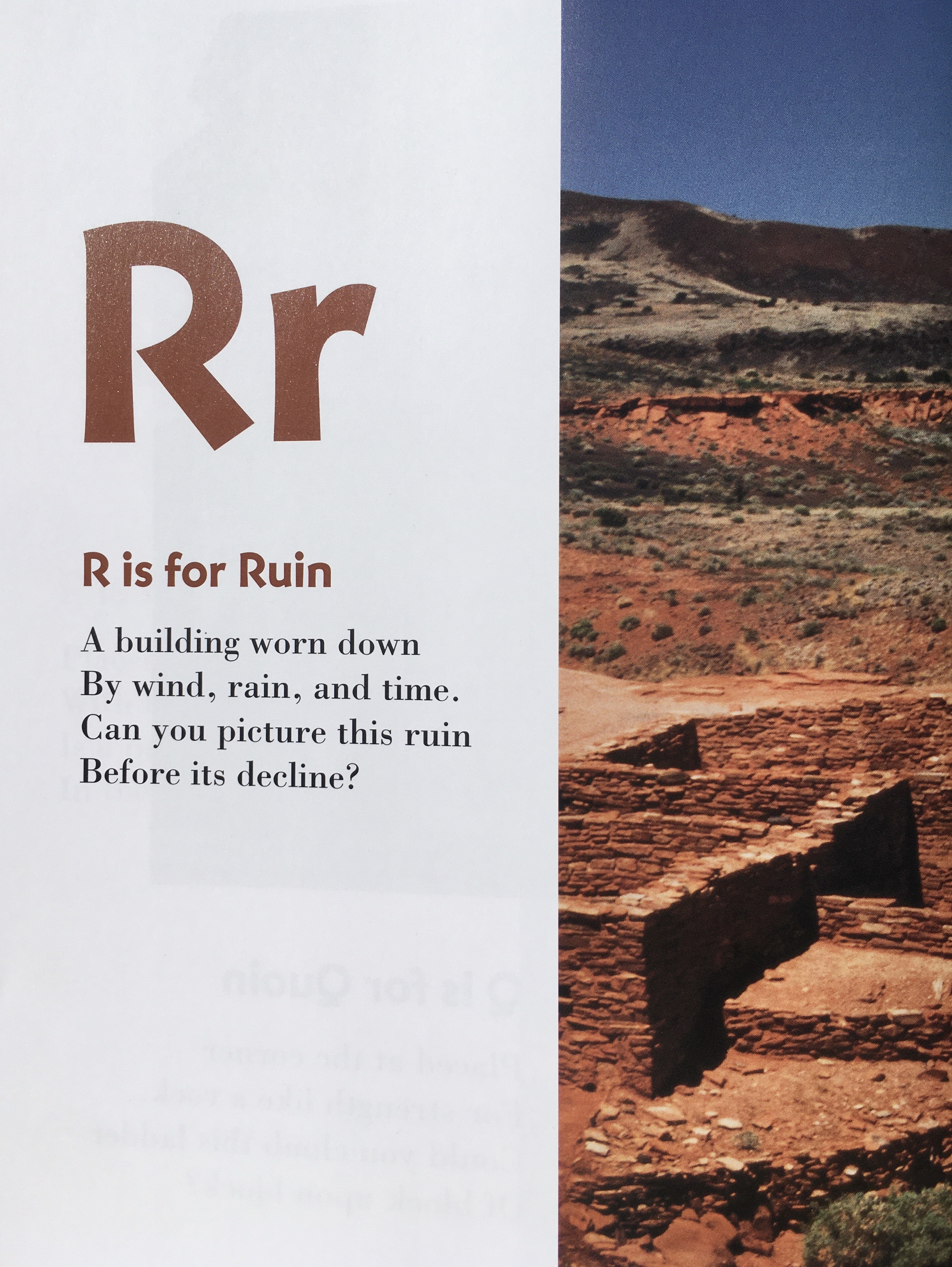
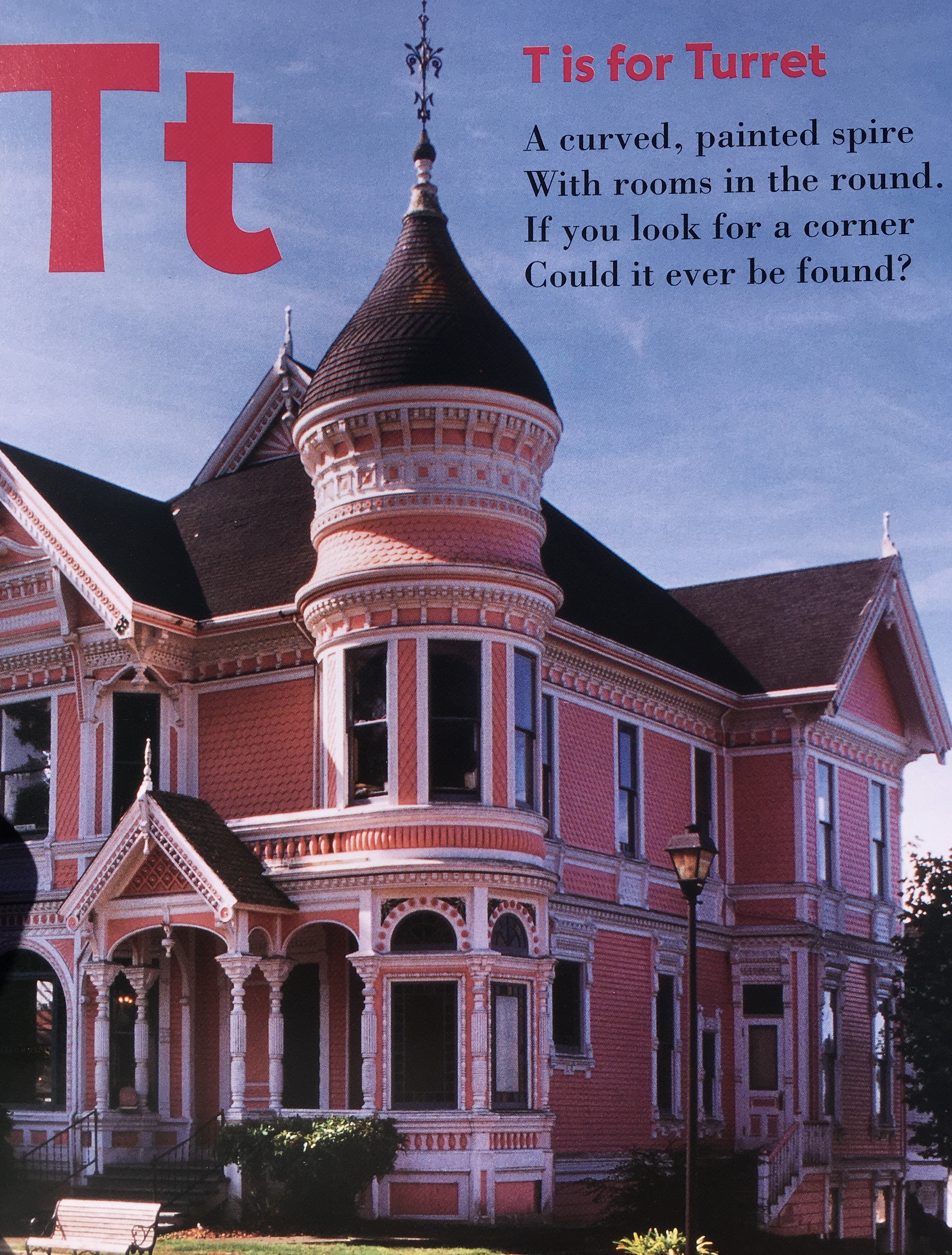
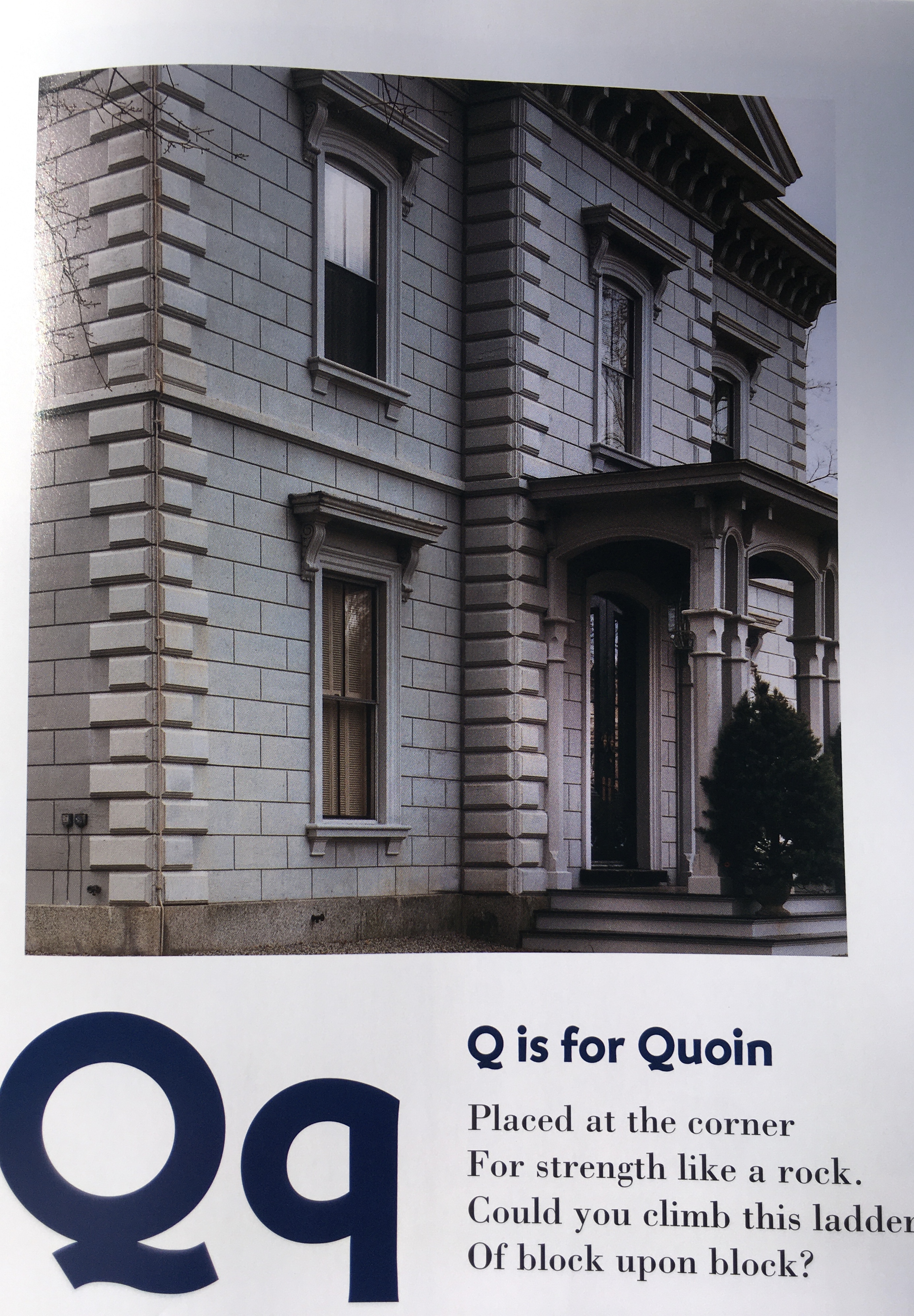
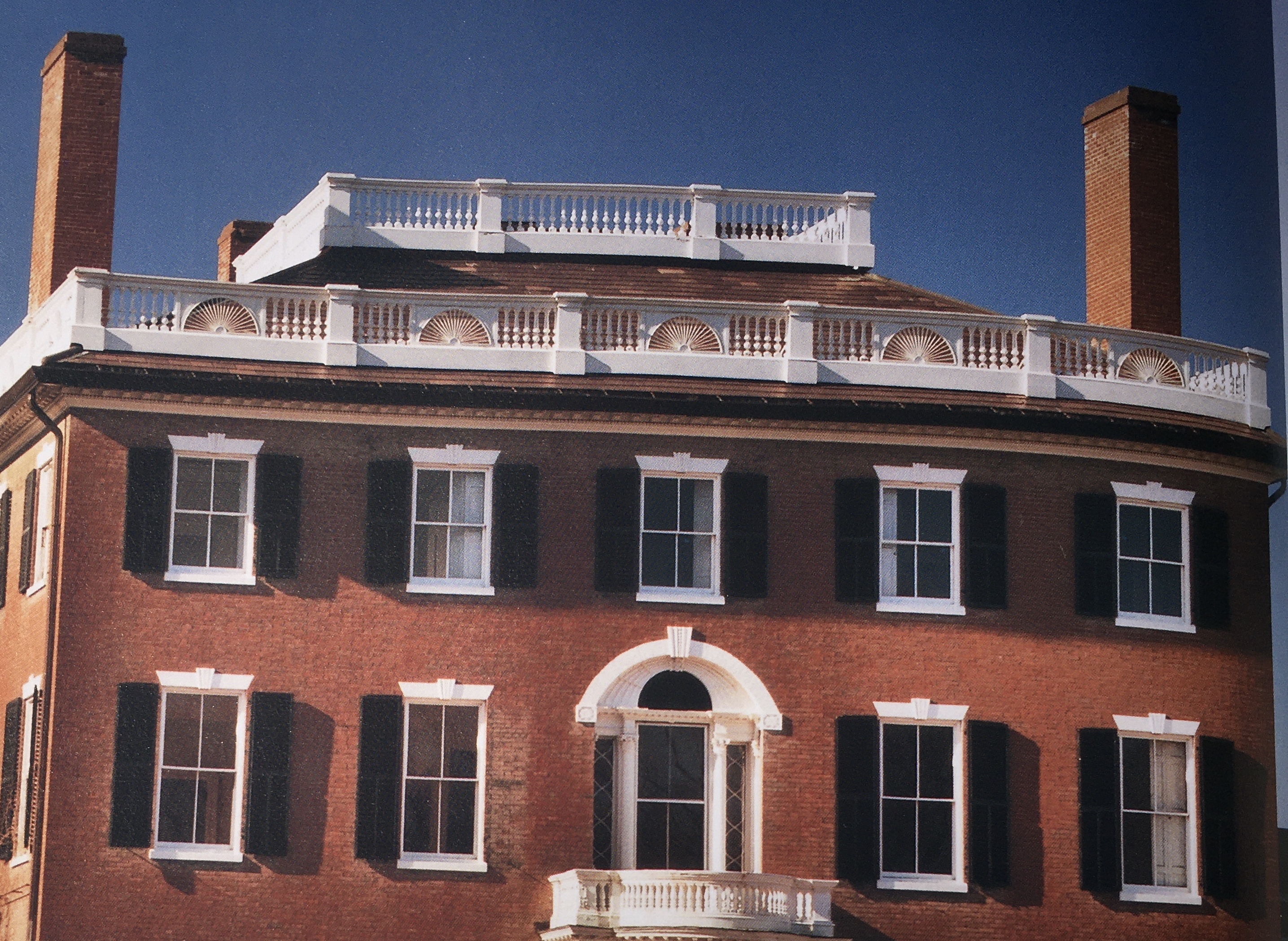
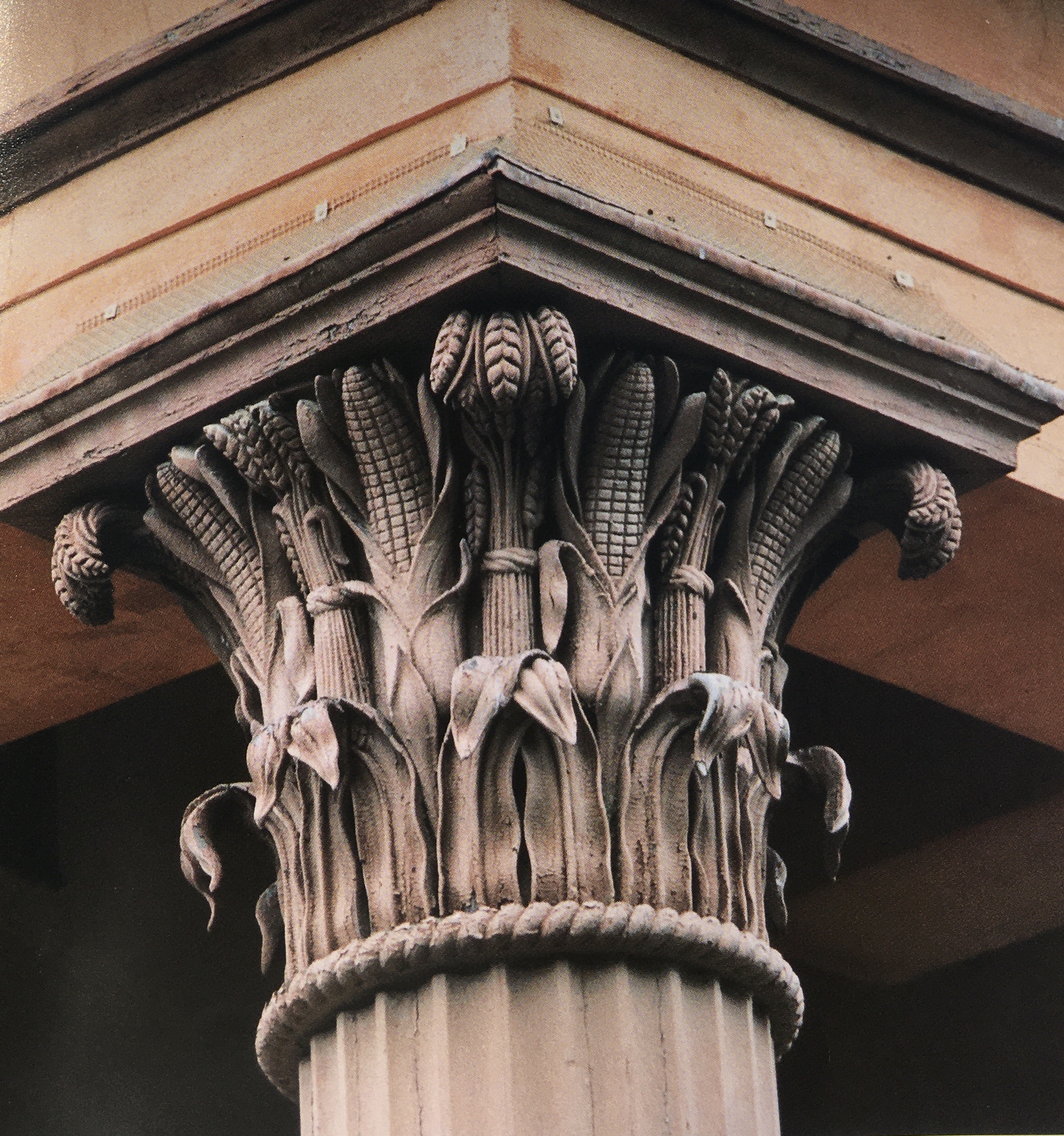
Welcome to the 2nd year of visual art on the radio! Today, we visit via Zoom with architect Michael J. Crosbie, a University of Hartford architecture professor who has written a children’s primer about architecture. Below are some pages referenced in our conversation:

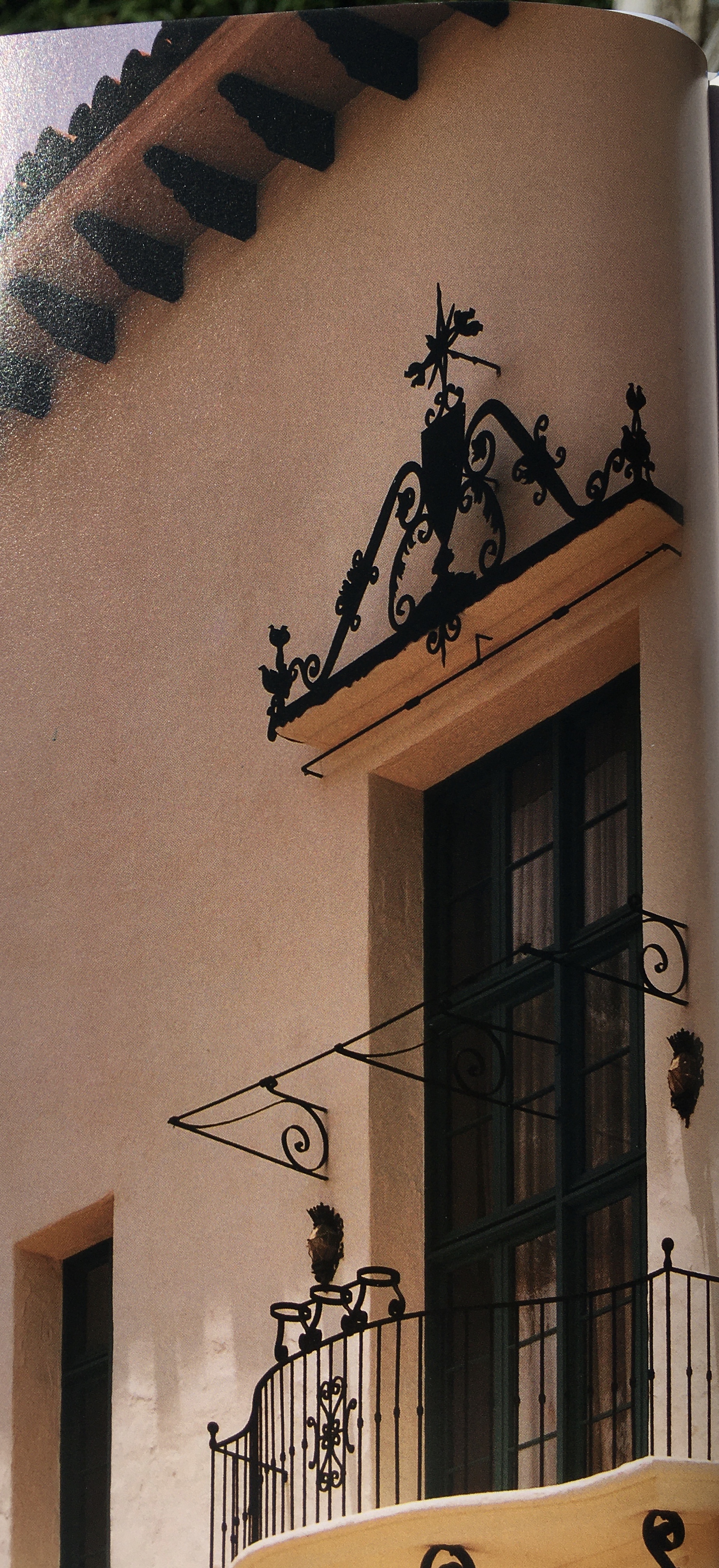
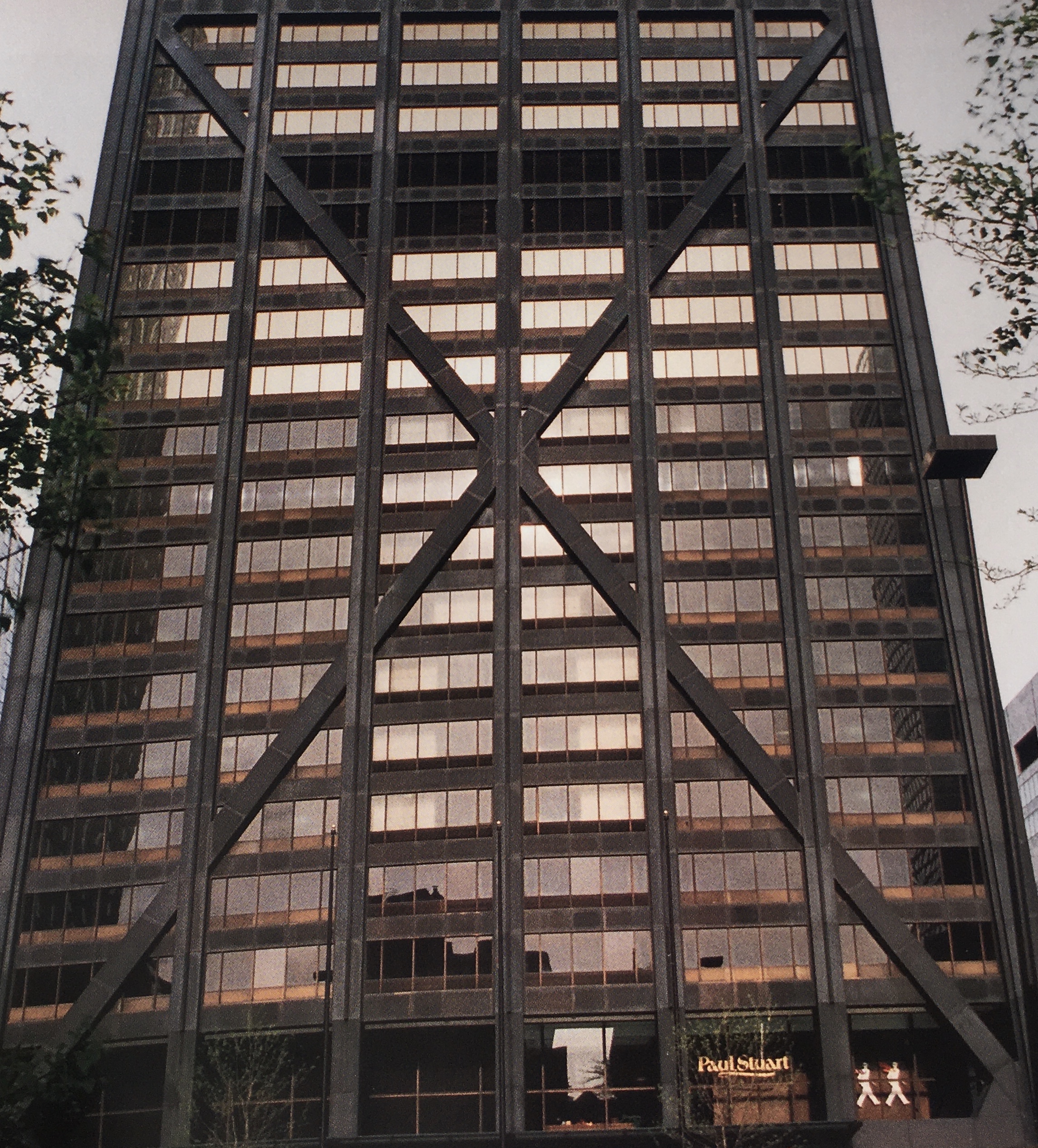
Can you guess what the ones below are?

We also talked about:

Chicago
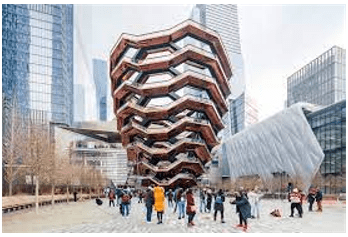
The Vessel, aka The Hive, in NYC
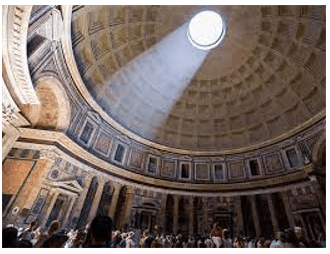
The Pantheon in Rome
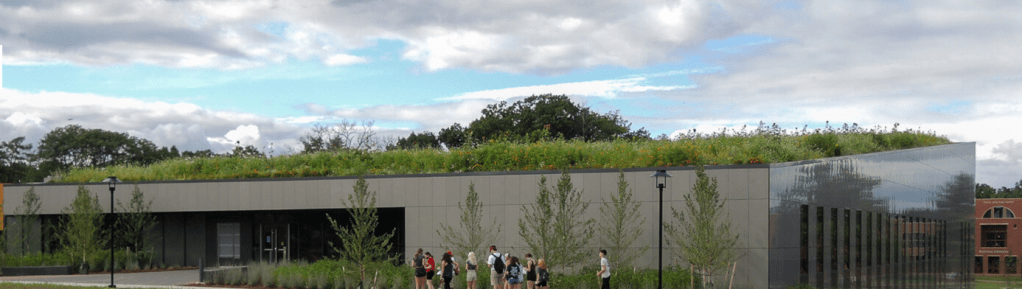
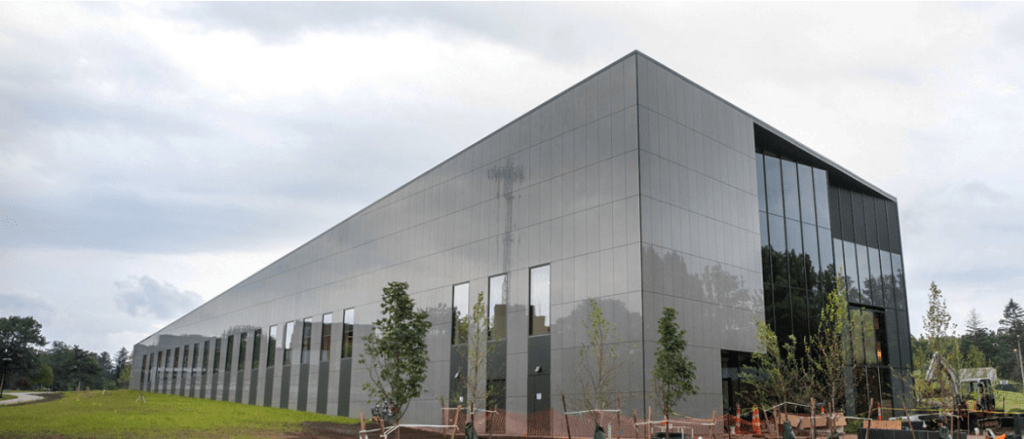
The newest building on the UHart campus, the Hursey Center
Back view

As I wrap up this first year of Open Studio, I want to thank a few people who’ve been instrumental in keeping the show going, especially Leith Johnson for composing the opening and closing theme music as well as the station break music, for his stomping out all manner of technical fires, and for his all-round moral support. Thanks, too, to WESU general manager Ben Michael, program manager Rick Sinkiewicz, and program director Ben Spencer for determinedly making community radio happen during the pandemic. Thanks to Sarah Bank and Mary Ahlstrom for promoting Open Studio on social media. Special thanks to all my brilliant guests – you’re an inspiration — and finally, a big thank you to you, listeners, for tuning in. If you enjoy community radio and shows like mine, I hope you’ll be generous at pledge drive time. I’m Maria Johnson, thanks for listening.
The graphic novel as college textbook

Listen to the episode

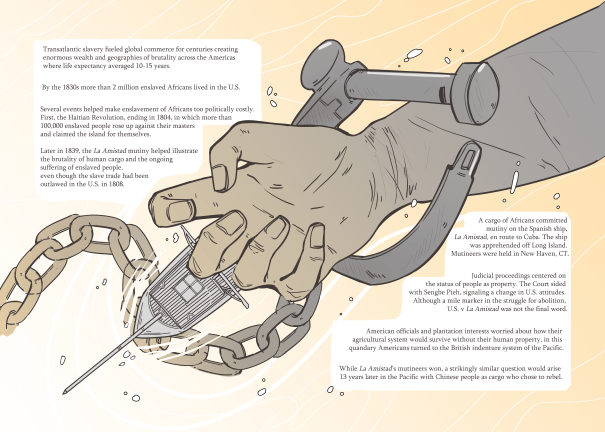
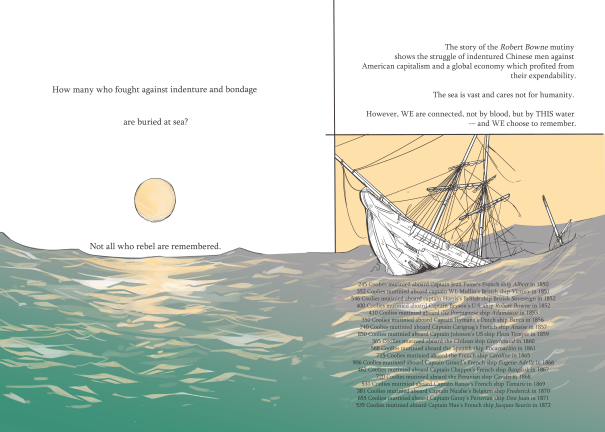
Immediately above and below are images from a graphic novel created by UConn history Prof. Jason O. Chang about a 19th-century mutiny by Chinese slaves on a ship that ultimately wrecked on Japanese shores.
Today, we go beyond the Sunday funnies and explore the graphic novel with Prof. Chang and Prof. Charles Baraw, from Southern CT State University’s English dept.
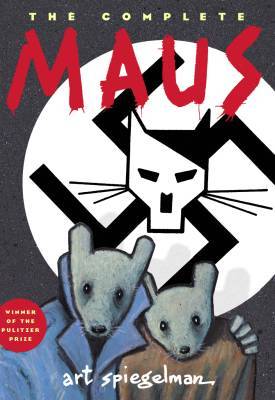
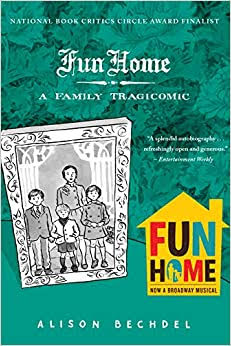
Graphic novels, for those unfamiliar with the term, take the comic book into the deep end of the pool. One graphic novel you may have heard of is Art Spiegelman’s Maus, set in Nazi Germany. Another is Alison Bechtel’s Fun Home, which was made into a Broadway musical.
As you’ll hear, both of my guests, interviewed via Zoom, have developed creative approaches to reading, analyzing, and even creating graphic novels.

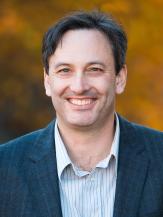
Prof. Jason O. Chang. One of his articles won the 2018 Koontz Prize for the most deserving contribution, tracing the role of Chinese merchants across successive imperial regimes in the Pacific. He also serves on the West Hartford Board of Education.
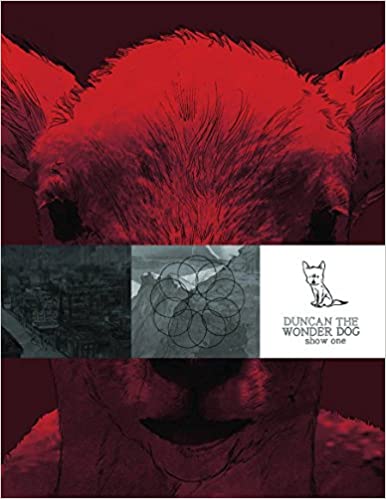
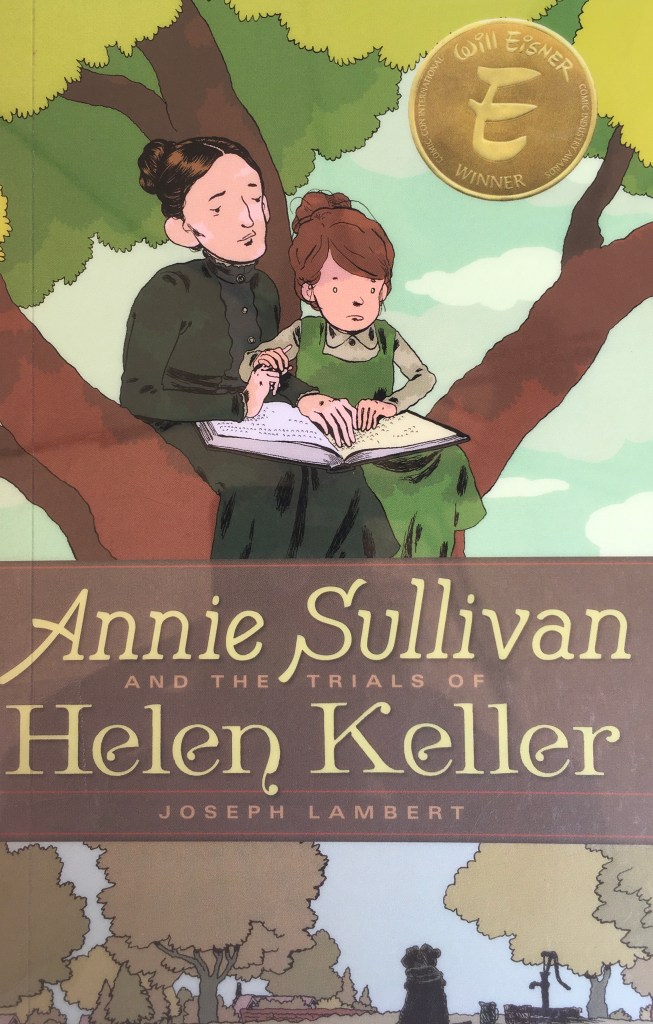
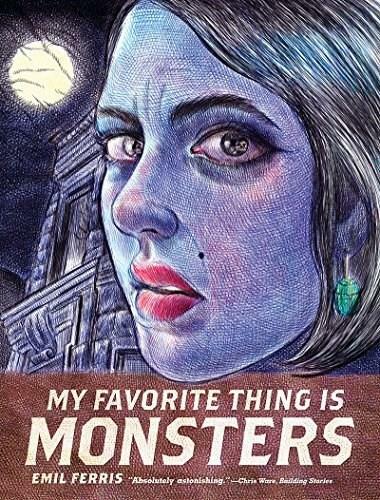
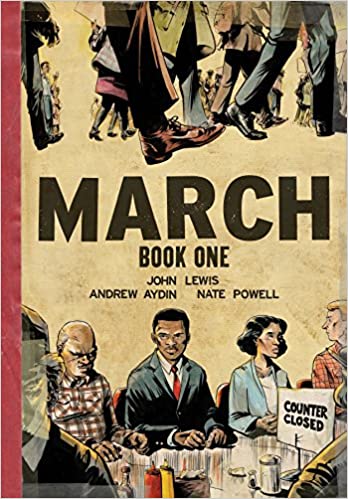
Prof. Charles Baraw. He is the recipient of the 2019 SCSU Board of Regents Teaching Award and the 2018 J. Philip Smith Outstanding Teacher Award. Below are covers of some of the graphic novels he teaches:

With this episode of Open Studio: Conversations on Art & Why It Matters, we close out our first year of visual art on the radio! I want to thank a few people who’ve been instrumental in keeping the show going, especially Leith Johnson for composing the opening and closing theme music as well as the station break music, for his stomping out all manner of technical fires, and for his all-round moral support.

Thanks, too, to WESU general manager Ben Michael, program manager Rick Sinkiewicz, and program director Ben Spencer for determinedly making community radio happen during the pandemic. Thanks to Sarah Bank and Mary Ahlstrom for promoting Open Studio on social media. Special thanks to all my brilliant guests – you’re an inspiration — and finally, a big thank you to you, listeners, for tuning in.

I invite you to enjoy the first episode of the new season, on Sept. 26th, when I’ll talk to Michael Crosbie, an architect whose books include a primer for children, called From Arches to Zigzags, an Architecture ABC.

‘Can You Repeat the Question?’ — an inquiry into identity

Listen to the episode

Award-winning Brazilian American multidisciplinary artist Chantal Feitosa, of New York, takes us through her exhibit, “Can You Repeat the Question?,” at Hartford’s Real Art Ways through Oct. 17. She was invited to exhibit as a winner, selected from hundreds of applicants, of a $2,500 award for emerging artists living in New England, NJ, and NY. Her work — collages and a video installation — focuses on, among other things, ethnicity and gender and how those differences play out from earliest childhood, in school.
Brown Bag Lunch (Ham’s Redemption), 2021, is based on a ’70s era survey of Brazilians invited to self-identify about their skin color. It has a video installation on the reverse.
Blackfish Bay Catch of the Day (detail), 2021
Nobody Puts Baby In a Corner (detail), 2021
High Fashion Bootstrapping (detail), 2021
Fireweed (detail), 2021

A related interactive website can be accessed at https://brown-bag-lunch.glitch.me/

Chantal Feitosa’s website: chantalfeitosa.com

Next episode: Sept. 12. Comics and the graphic novel

Turning plastic waste into art to bring awareness to endangered animals

Listen to the episode

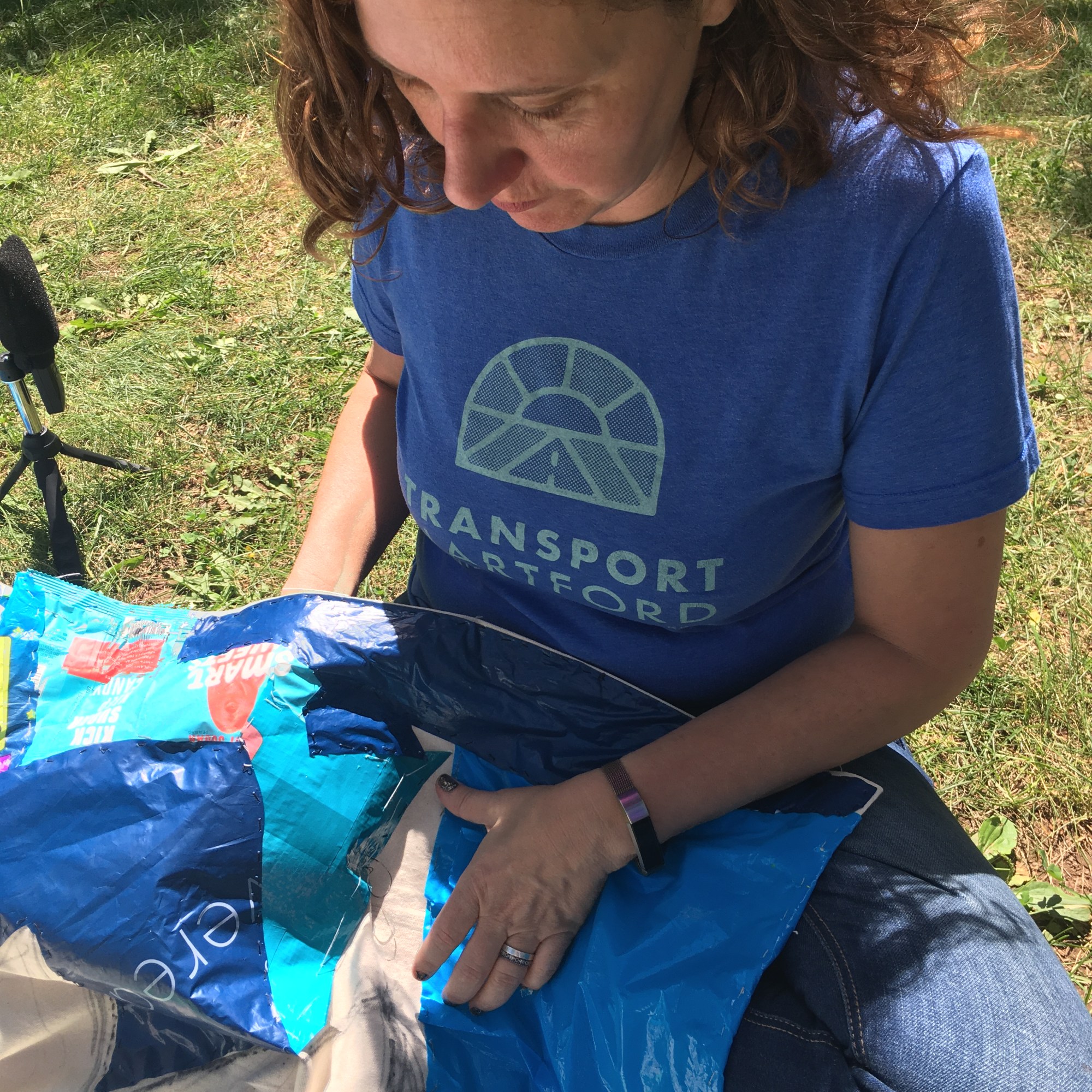
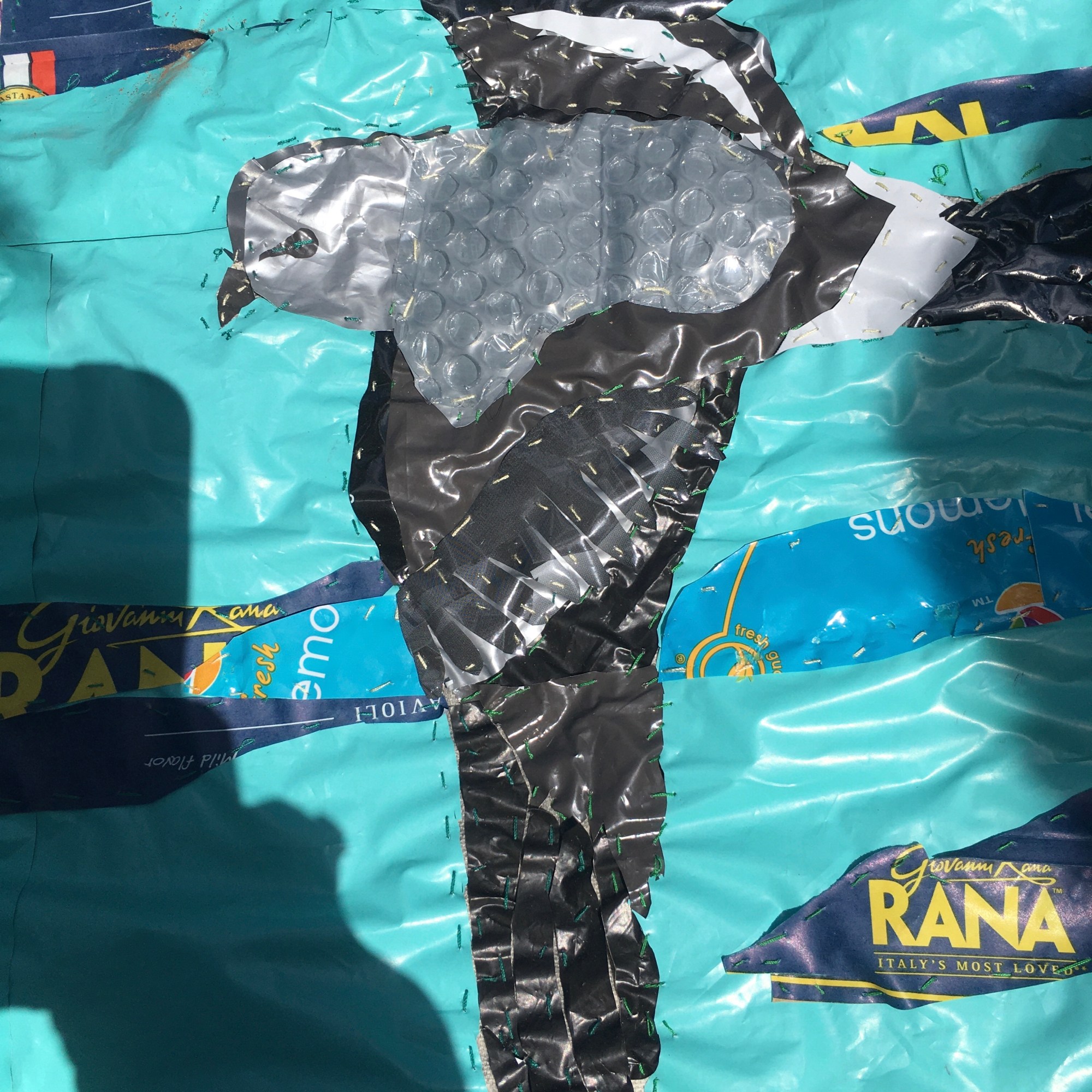
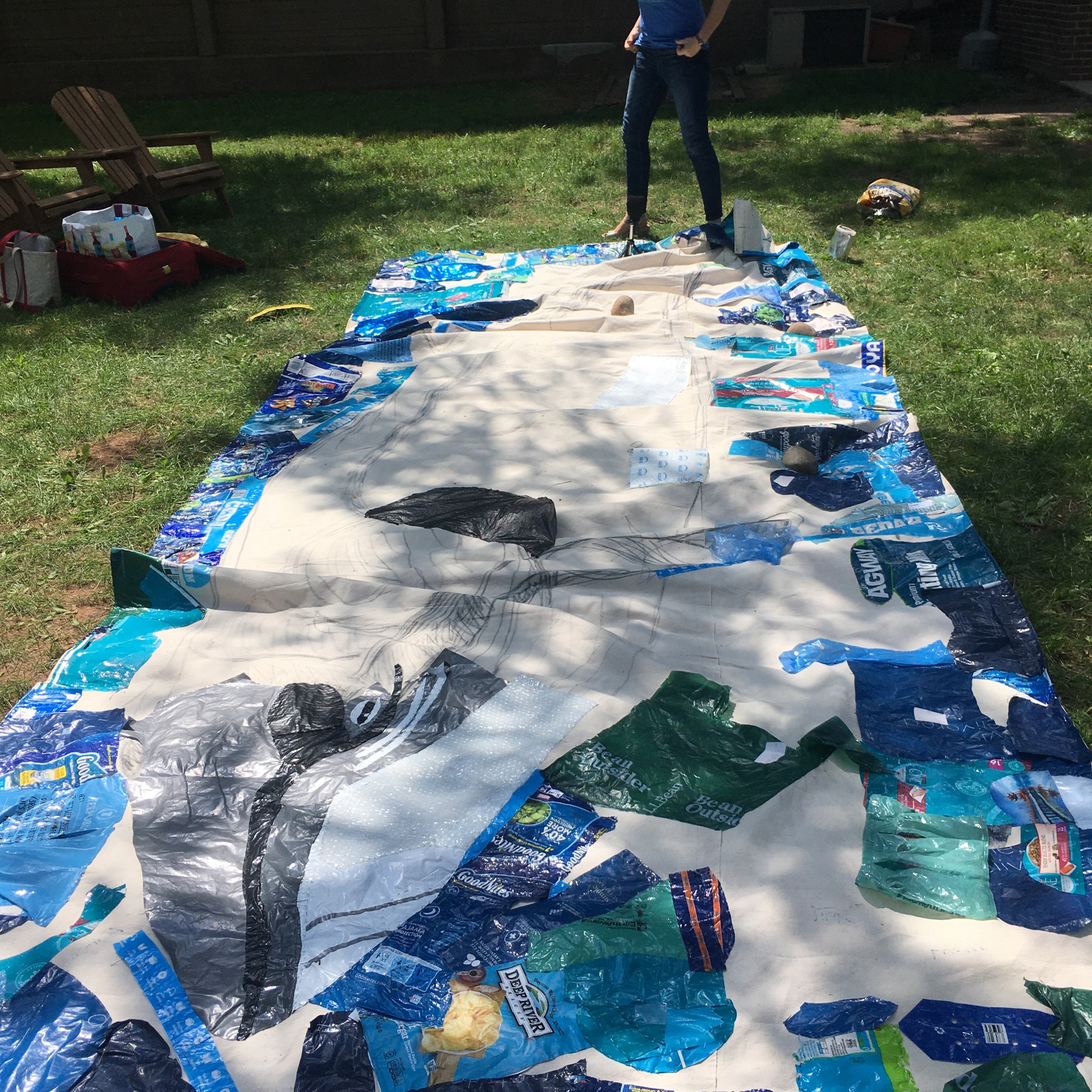
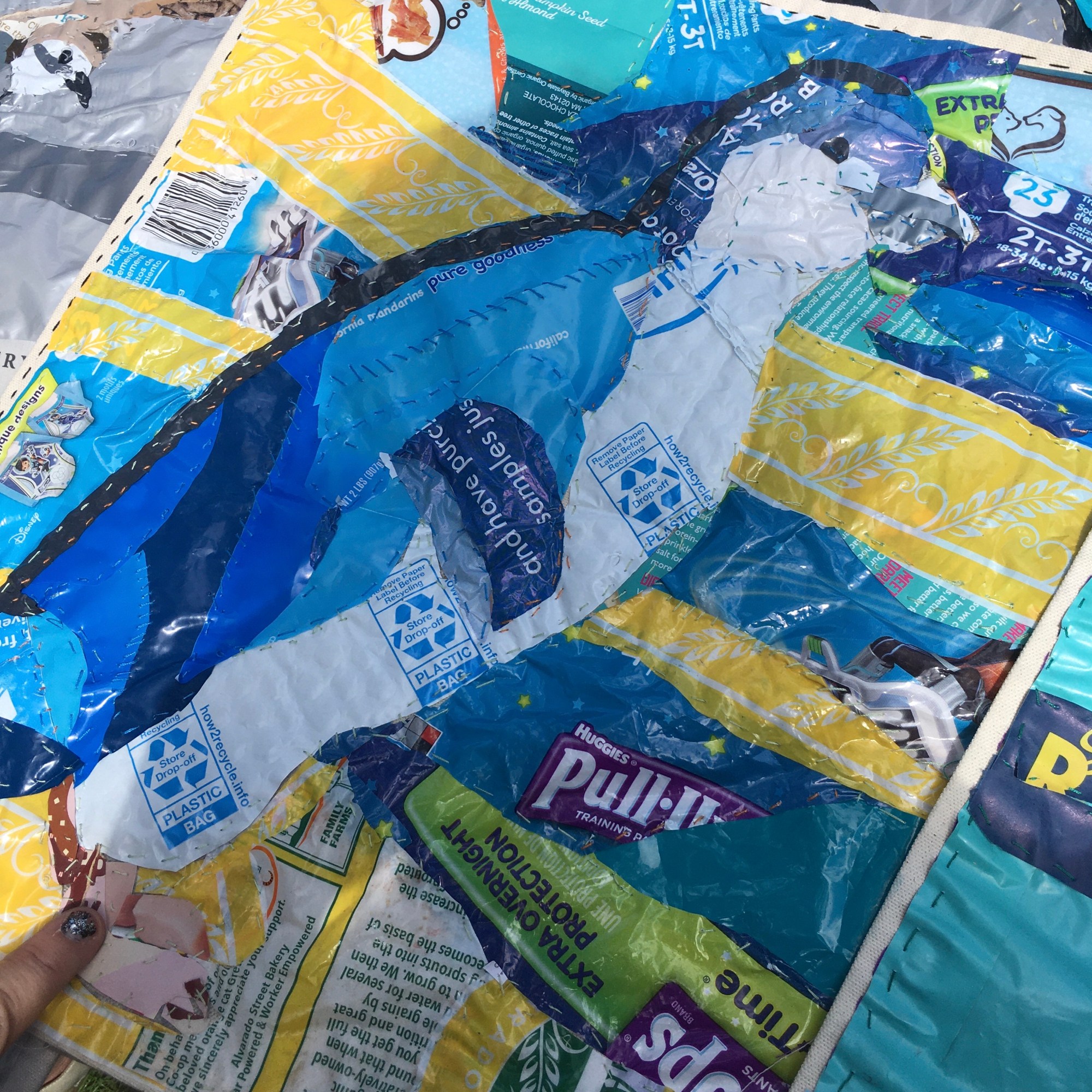
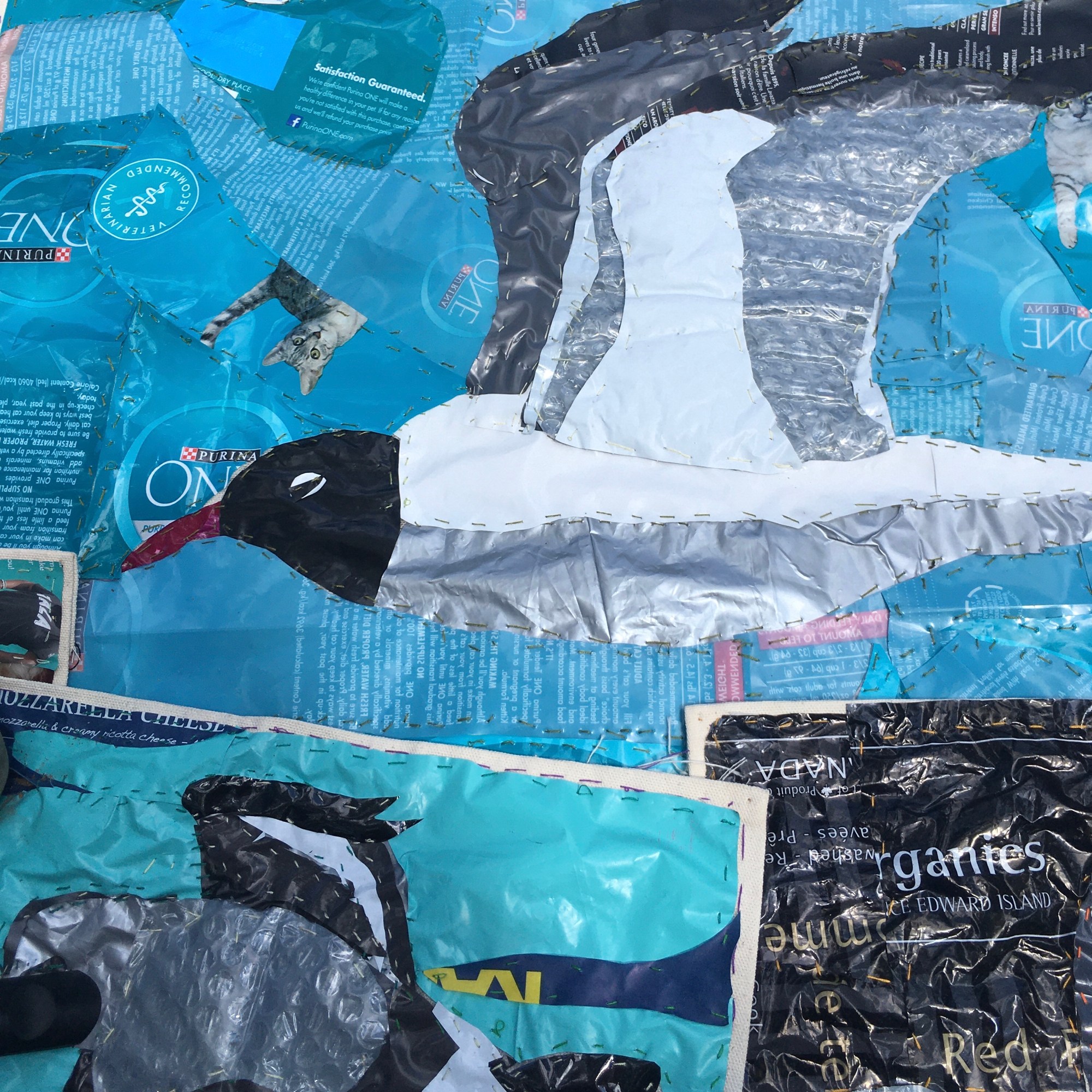
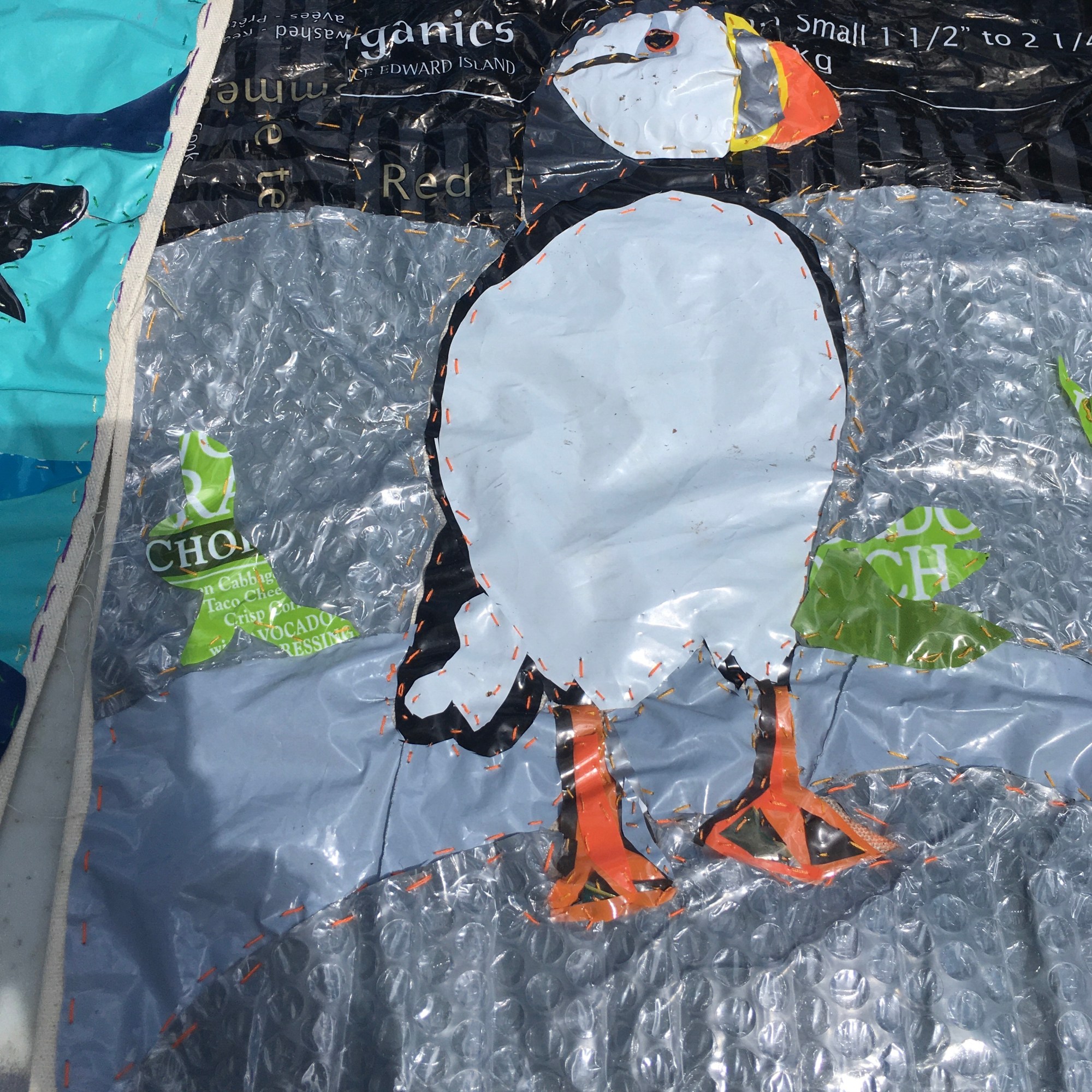
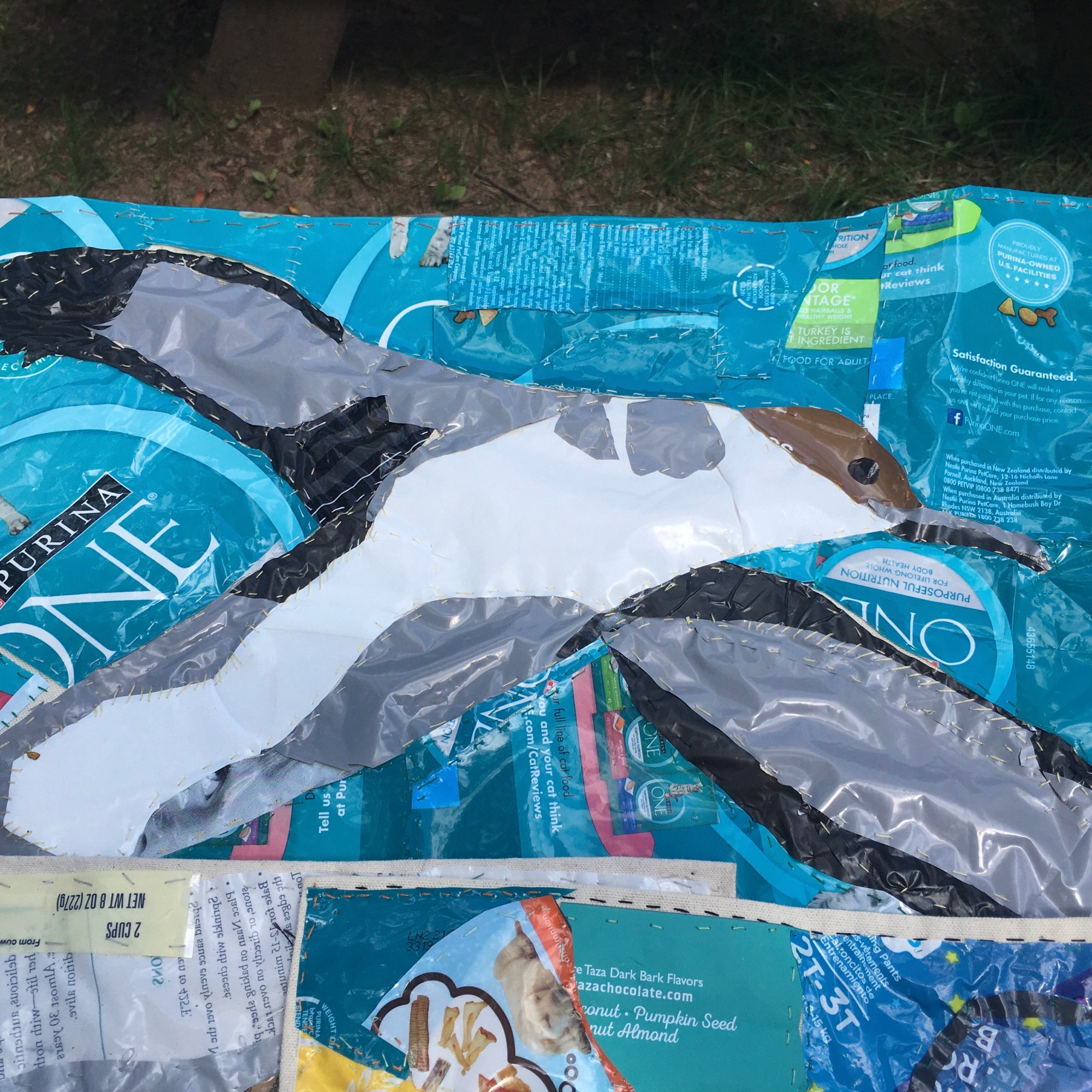
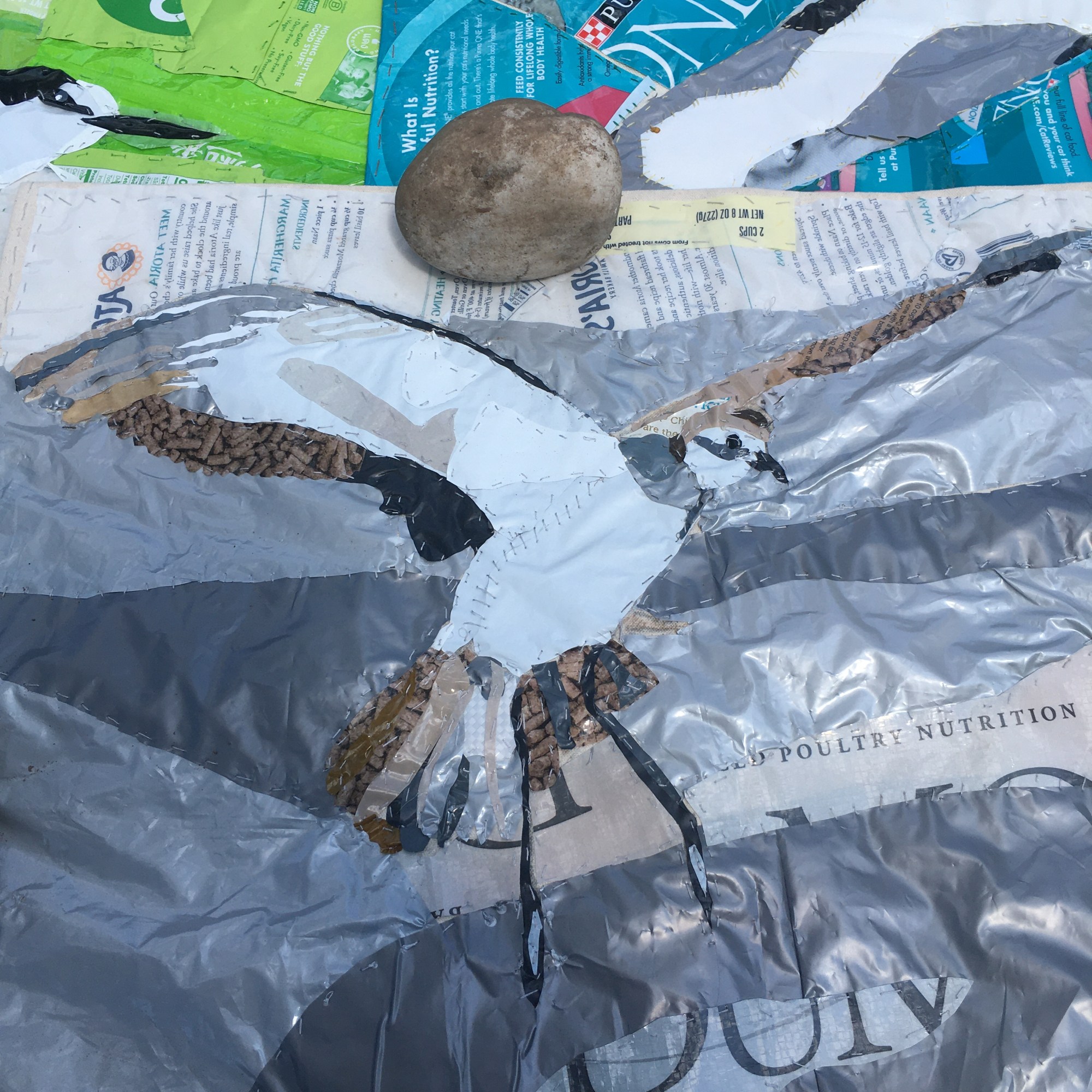
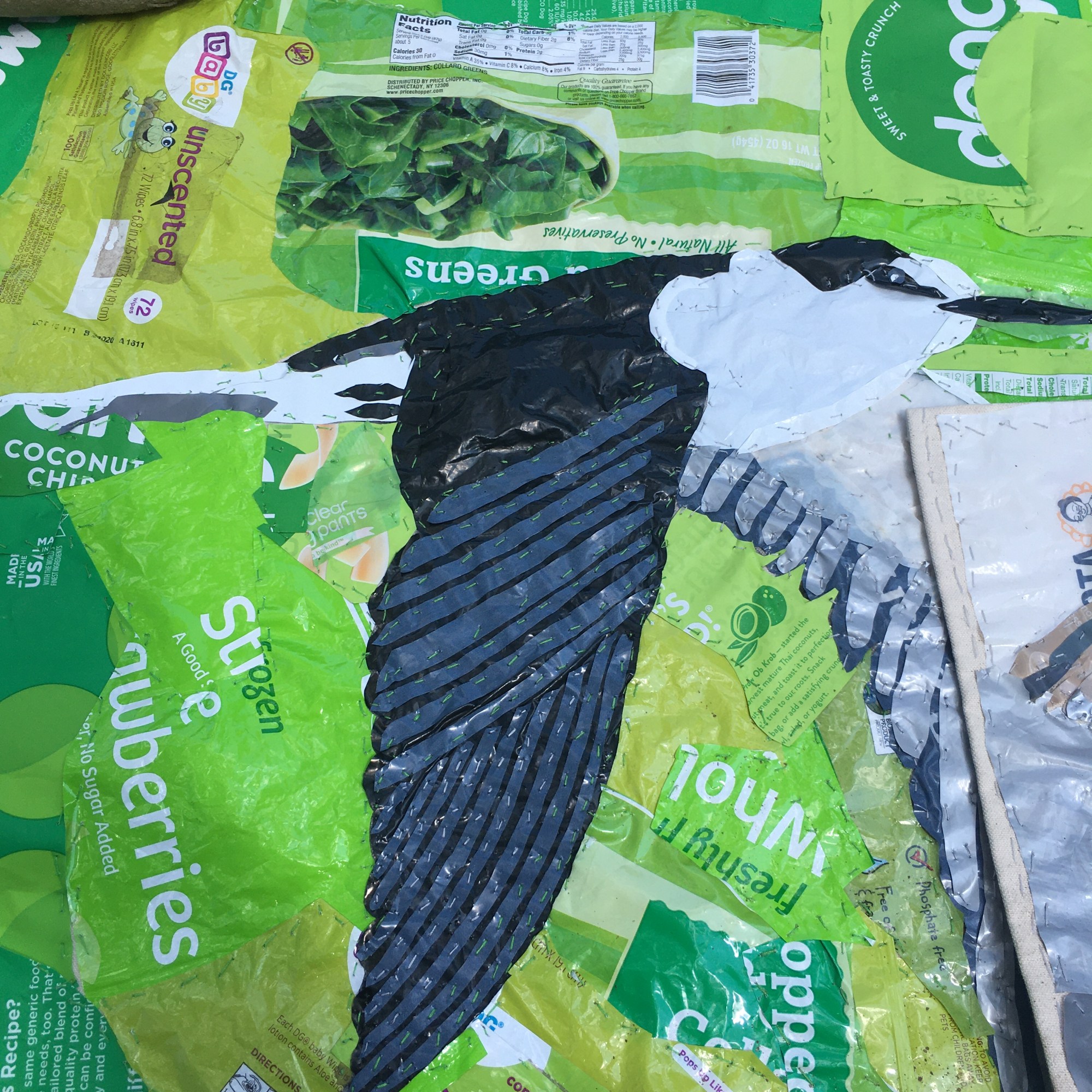
Using discarded household plastic, Katharine Owens, an artist and poli sci professor at the University of Hartford, creates life-size wall hangings of sea creatures and birds that are endangered by eating or getting entangled in ocean waste. She hopes to exhibit the series of 46 all together when they’re done.

Connect with Kat on Instagram @katowens2012 and on TT @kathaowens; her website is katowens.com.

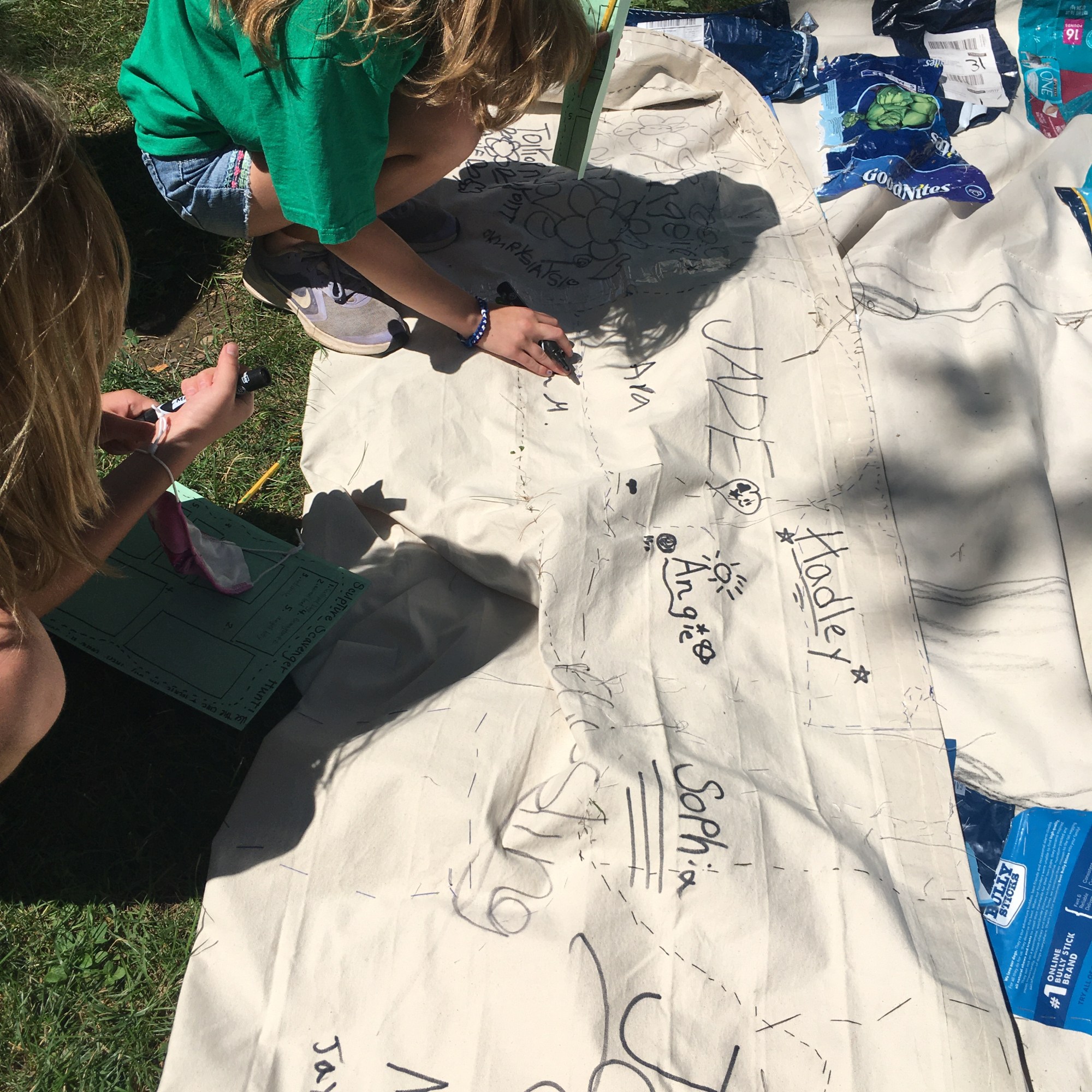
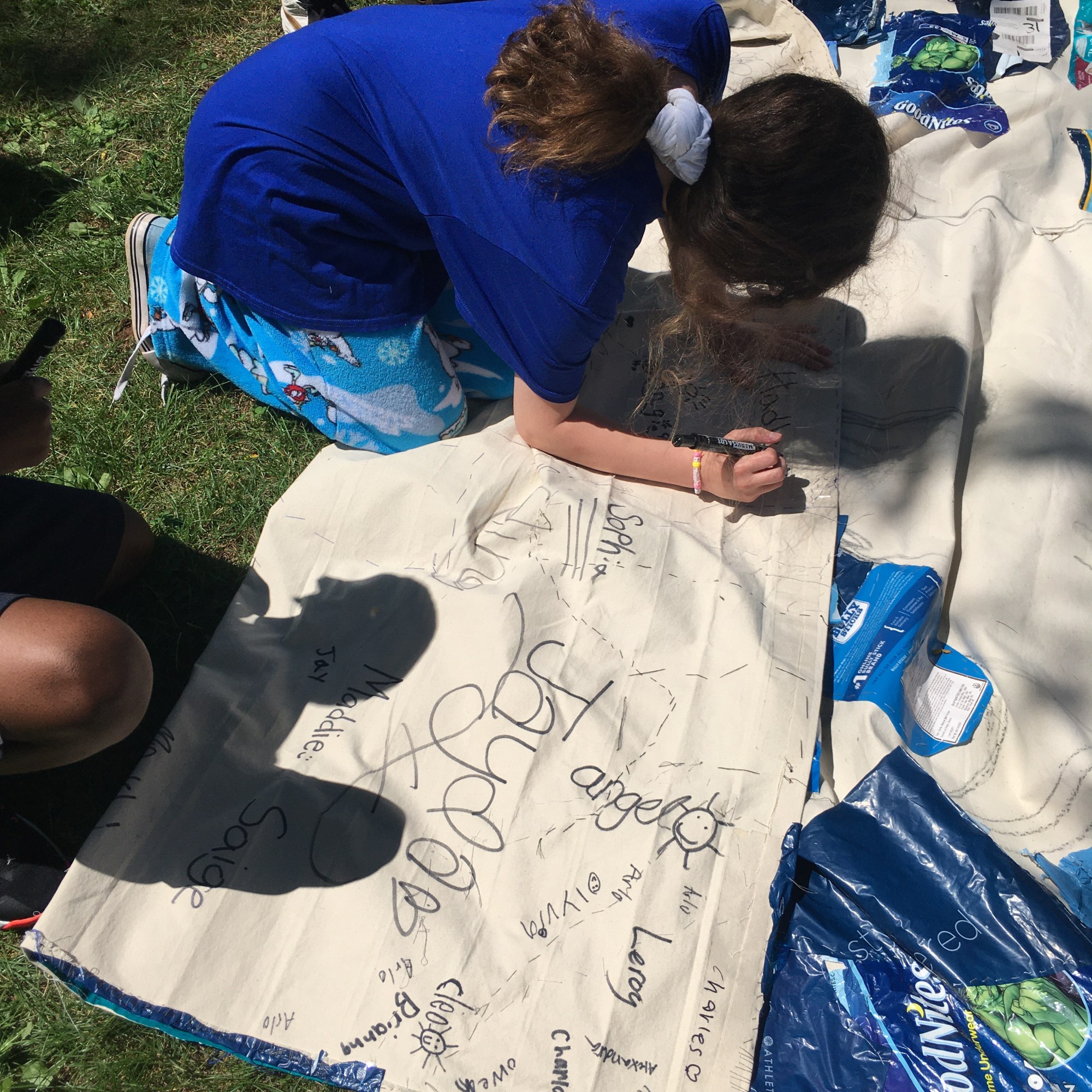
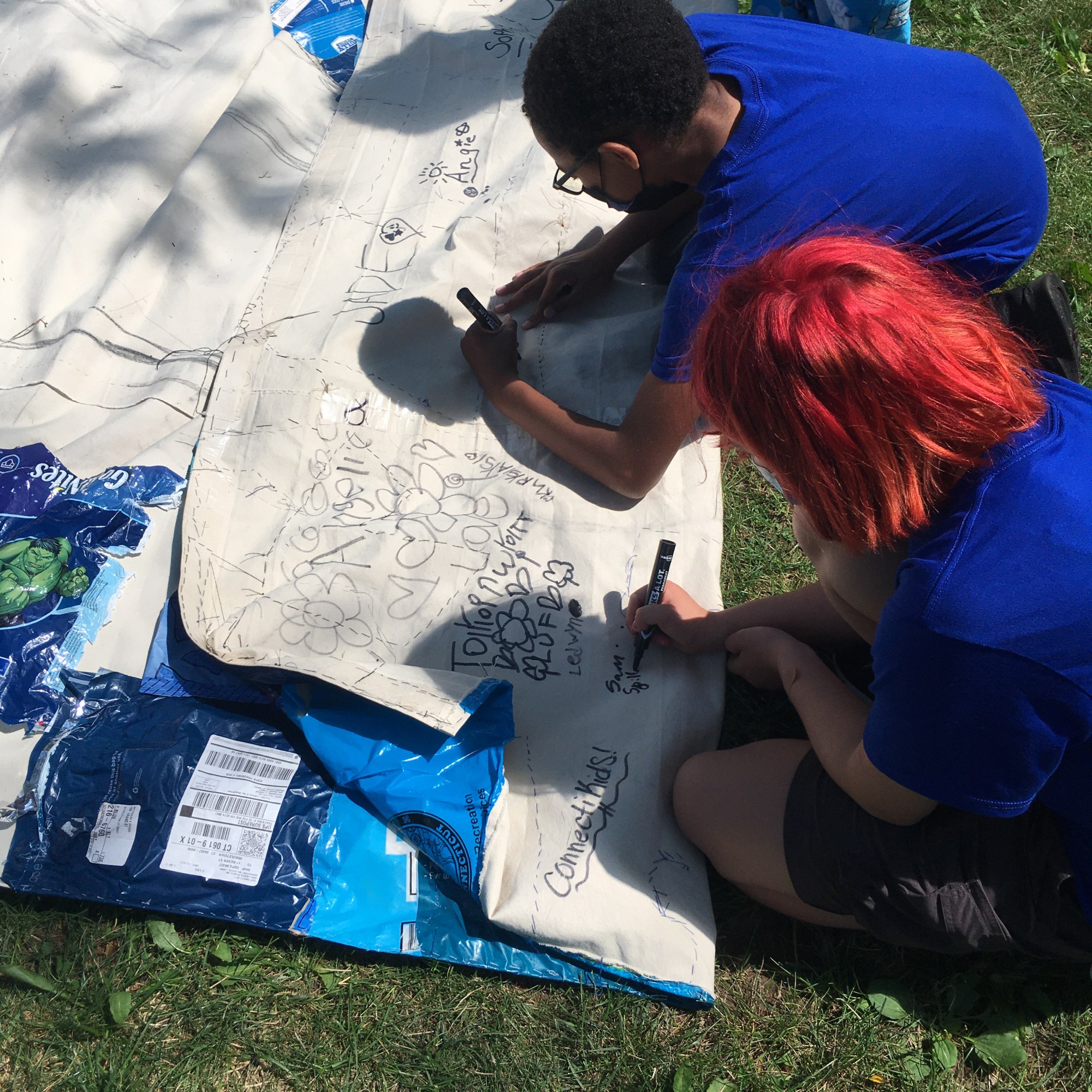
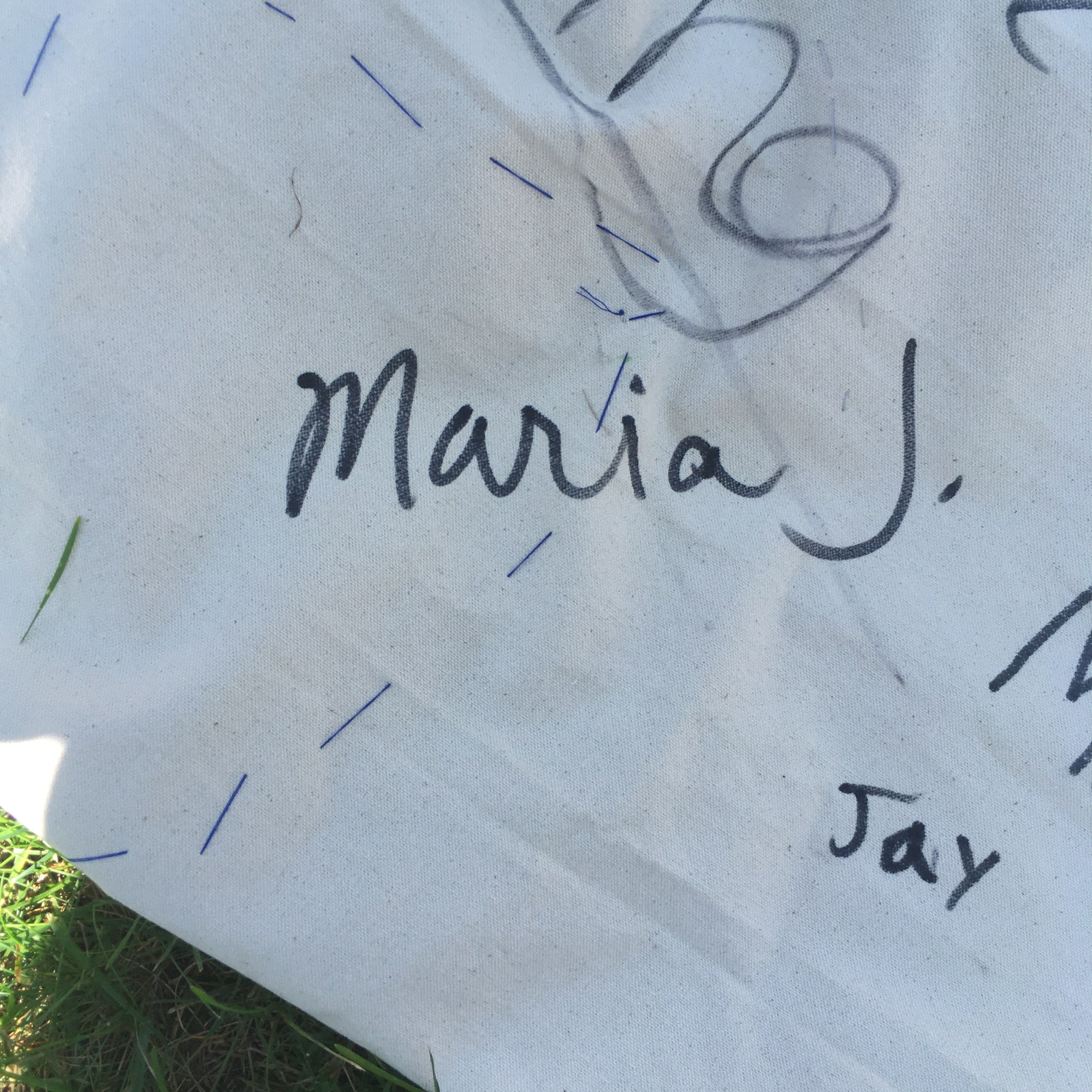
Below is one of three whales she’ll complete with the help of schoolchildren from across Connecticut and on Fishers Island, NY. Kat invites them to sign their work.

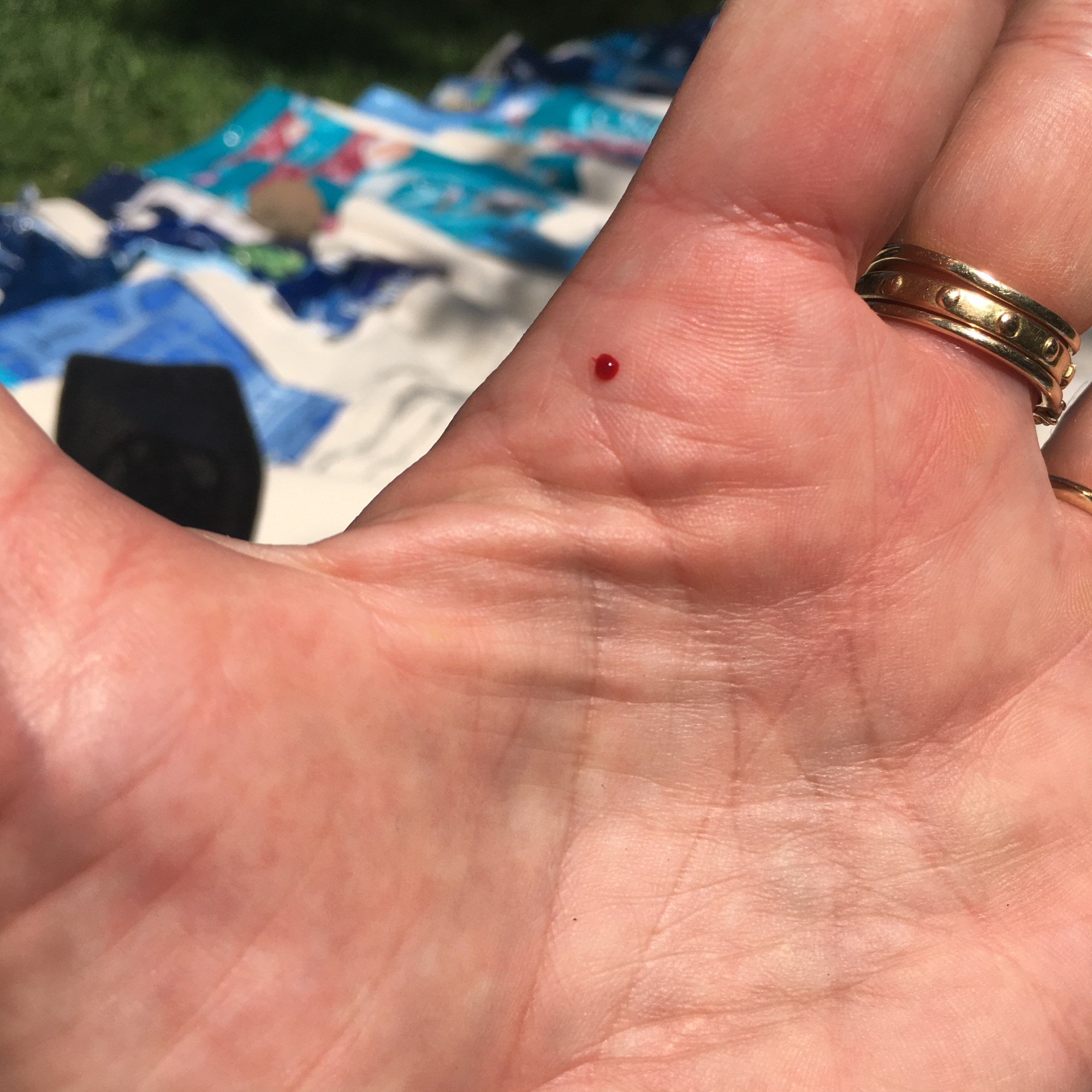
Below: I helped, too! (“Lotta DNA on this,” says Kat.)

Some finished seabirds below:

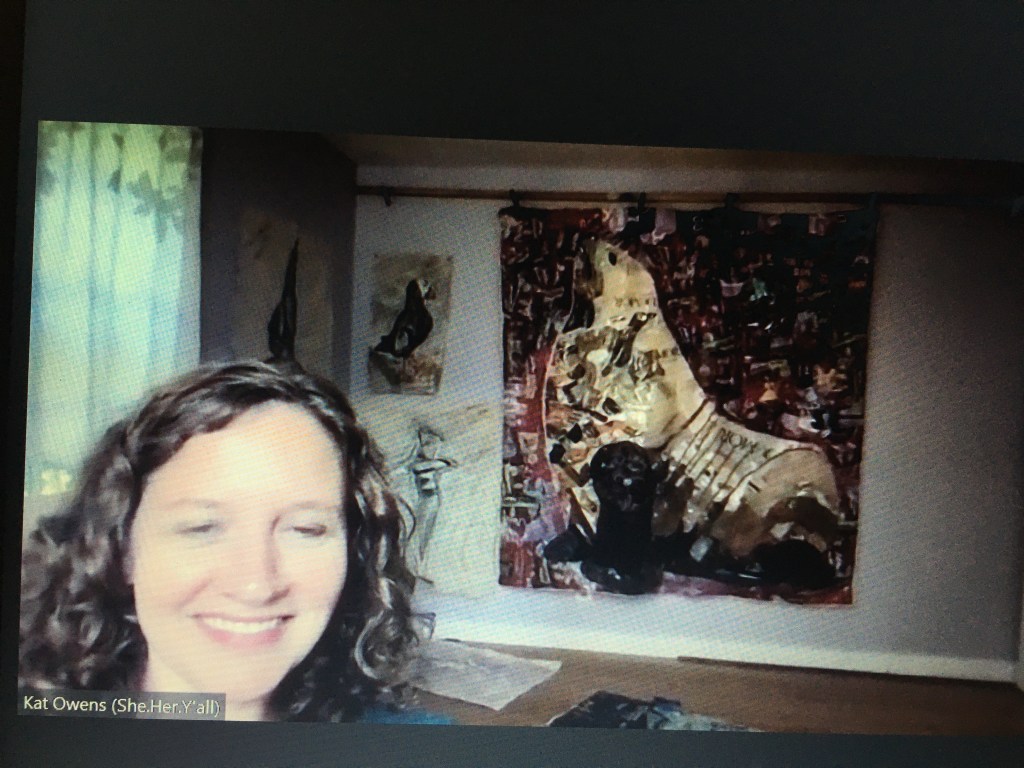
Below: “Trash talking” via Zoom:

Below: Kat’s mural of a sealion displayed in Kat’s home office, where she stores bins full of plastic:

‘Everything Italian Is Perfect’

Listen to the episode

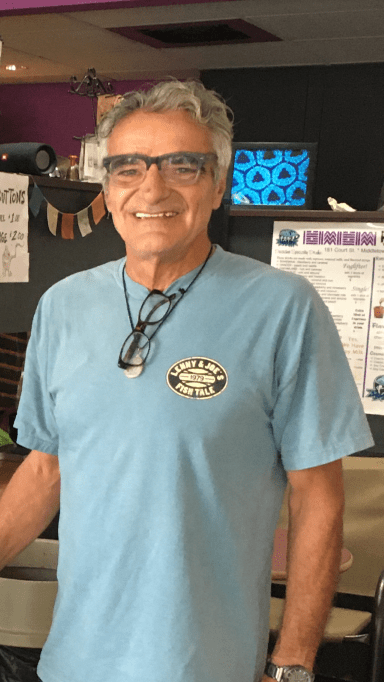
Sicily native Franco Liseo, longtime host of WESU-FM’s Italian language news and music program ‘Avanti Tutta’, celebrates all things Italian — the art, the food, the cars, the language, the people — in a lively conversation at a noisy Middletown cafe.

‘Avanti Tutta,’ with co-host Lucilla Caminito contributing commentary from Rome, airs and streams live every Saturday from 1-3 p.m. (EST) at 88.1 FM and wesufm.org.
Listen to an earlier conversation, from 2018, on the occasion of Franco’s 30th anniversary on WESU here.
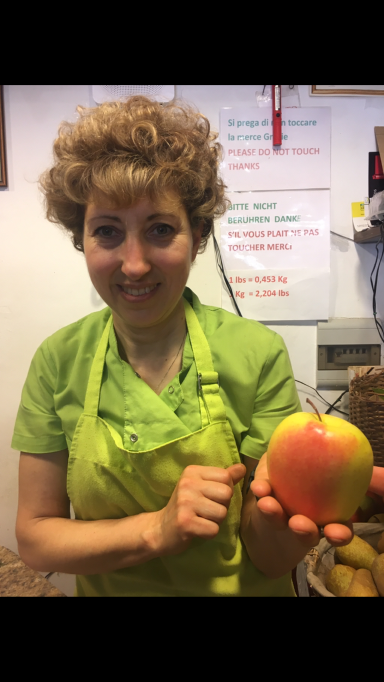
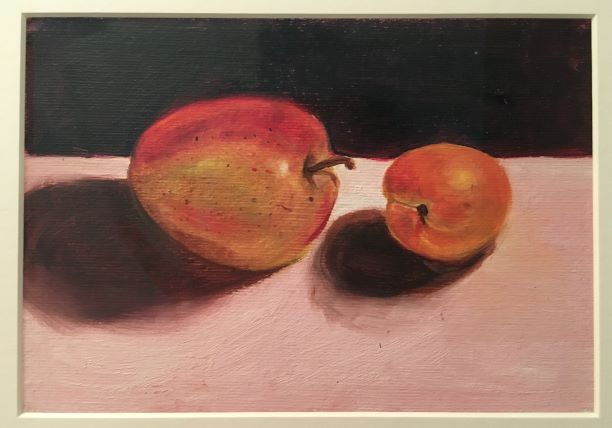
This is the Tuscan fruit seller I mentioned who wouldn’t take any money when I told her I needed an apple to paint.
The resulting masterpiece.

Power Boothe: Beyond the Bio

Listen to the episode

Power Boothe, Zooming

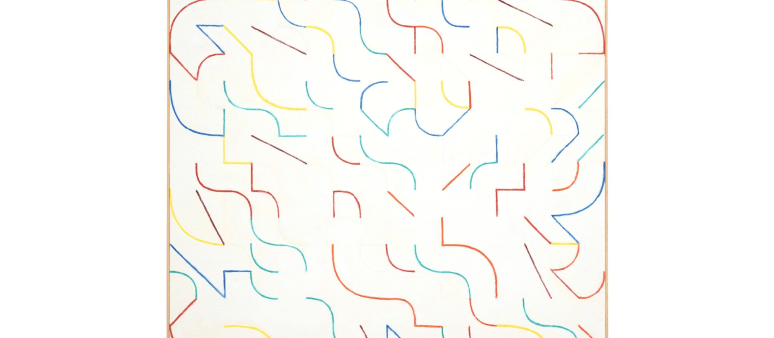
Abstract painter Power Boothe, a professor at Hartford Art School and its former dean, talks about his early development as a painter, including living hand-to-mouth in NYC, and his continuing development as an artist and teacher. Also: what it’s like to be named Power.

His work has been included in many public collections, including NYC’s Metropolitan Museum of Art, the Guggenheim Museum, and the Museum of Modern Art, and, in CT, the Wadsworth Athenaeum, the New Britain Museum of American Art, and the Florence Griswold Museum.

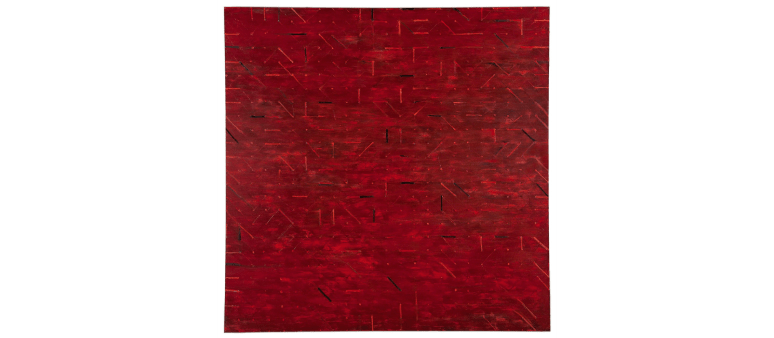
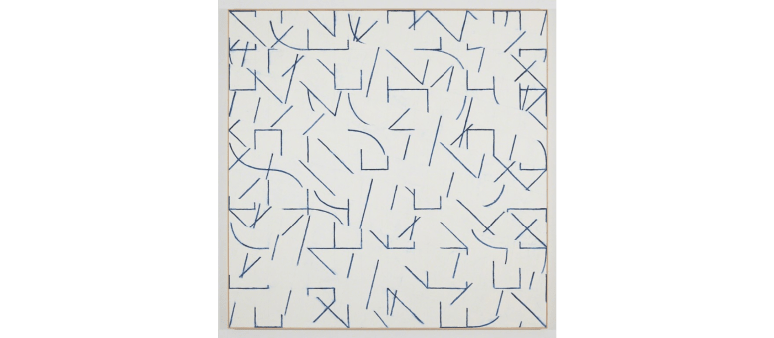
Here is a selection of recent paintings from artsy.net/artist/power-boothe. All are oil on canvas except for Ellipsis #121 which is watercolor on paper:

Disturbance, 2016, 48″x48″
Double Axis, 2018, 24″x24″
Ellipsis #121, 15 1/2″ x 15″
Entangle, 2016, 24″x24″
Fracture, 2016, 24″x24″
Heraclitian Fire, 2013, 72″x72″
Slow Turn, 2015, 18″x16″
Up Down and Across, 2018, 72″x72″

www.powerboothe.com

www.giampietrogallery.com

www.geoform.net

A morning with the Medici

Listen to the episode

Today, Mari and Maria’s Big Adventure. Two art buddies go to NYC for a press preview of the Metropolitan Museum of Art’s latest blockbuster exhibition, “The Medici: Portraits and Politics, 1512-1570.” It opened to the general public yesterday and will run till Oct. 11. I urge you to take it in if you can, as it really has something for everybody. History buffs will enjoy the high drama – the powerful Medici banking dynasty turned Florence from a Republic to effectively a monarchy, complete with Popes, and used art to cement its power. Art aficionados will be awestruck by the portraits – in paint, in bronze, in marble, on medals, lent from repositories all over the world – works by such heavy hitters as Raphael, Pontormo, Cellini, Bronzino and more.

Not only was it well worth the trip but you know what else?, it just felt good to be in a museum again! I was lucky that my friend Mari Firkatian was available to join me, as she is not only an artist, but teaches history , including the Renaissance, at the University of Hartford’s Hillyer College. Also, she and I have traveled to Italy – specifically Tuscany – on an art trip. So suffice it to say, this exhibit spoke our language. Join us as we travel to the Met for a richly rewarding walk through room after room of The Medici in portraits and politics.

Listen to the audio of co-curator Keith Christiansen’s presentation to the press in a very echo-y room!

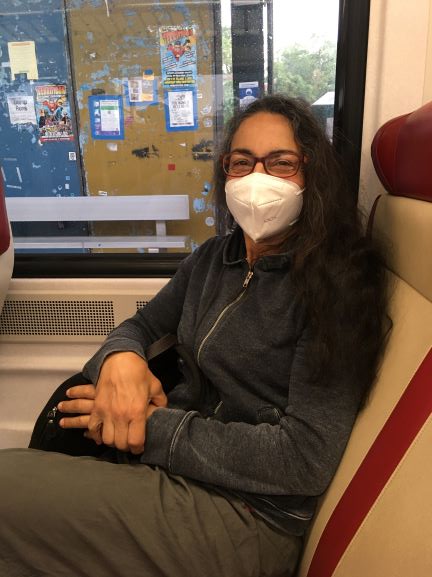
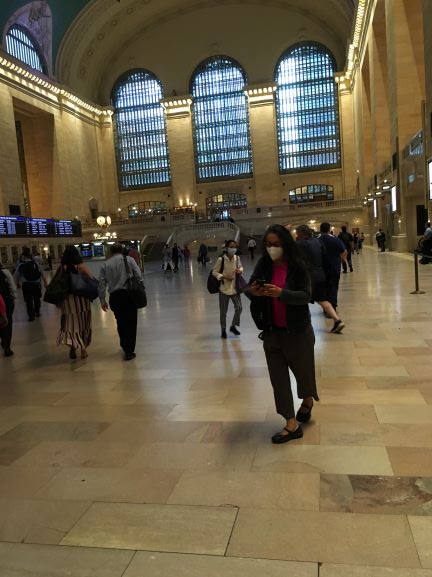
We took MetroNorth from New Haven to Grand Central Station.
At GCS
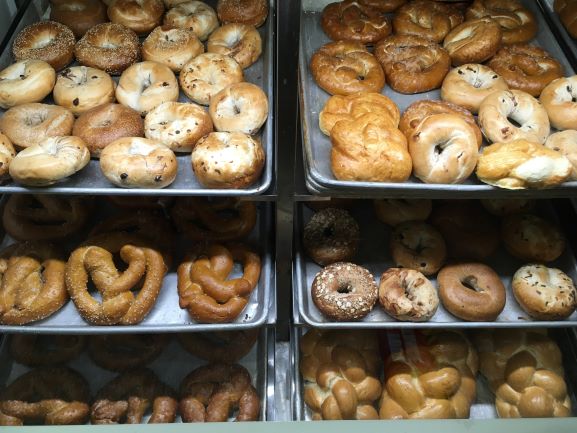
It’s NYC. Had to have a bagel — with a shmear!
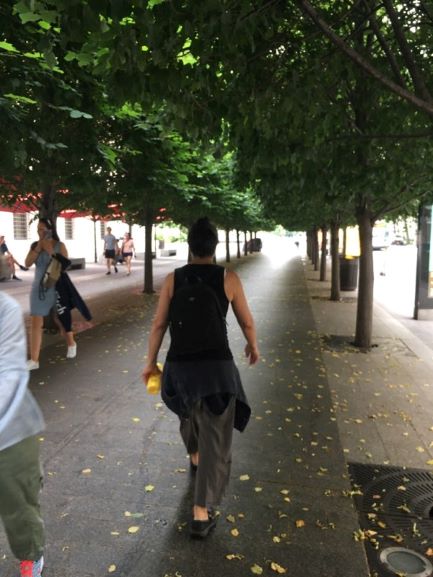
Met-bound
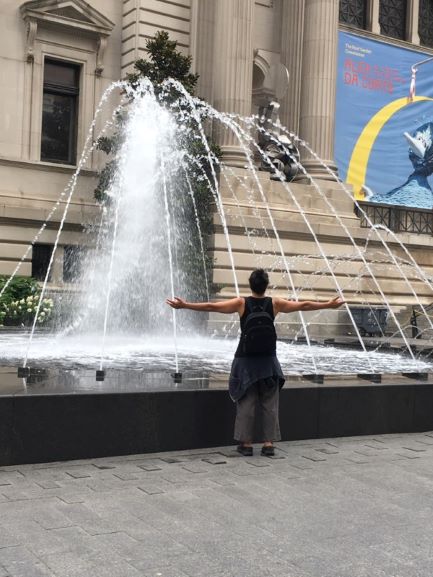
Outdoor air conditioning on a humid day
The obligatory banner

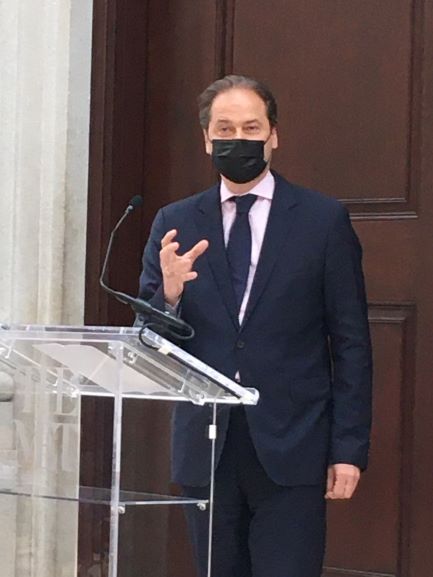
Met director Max Hollein greets the press and launches the exhibit…
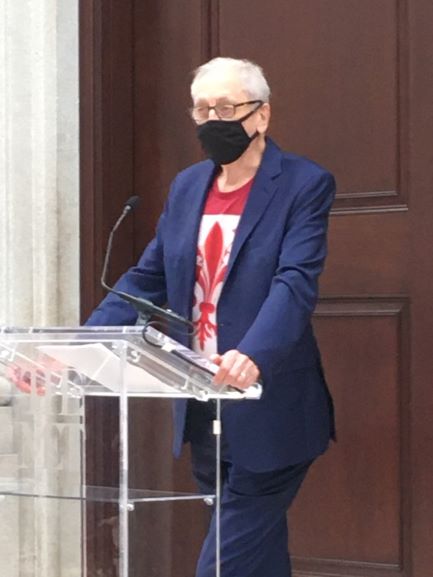
… along with Keith Christiansen, the John Pope-Hennessy Chairman of the Department of European Paintings, who co-curated the exhibit with guest curator Carlo Falciani, Professor of Art History at the Accademia di Belle Arti in Florence.
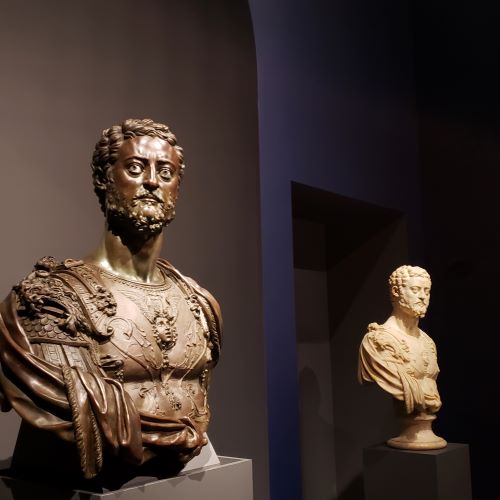
Two busts of Cosimo de Medici by Benvenuto Cellini greet visitors at the entrance to the show
Unfinished portrait of Michelangelo by Daniele da Volterra
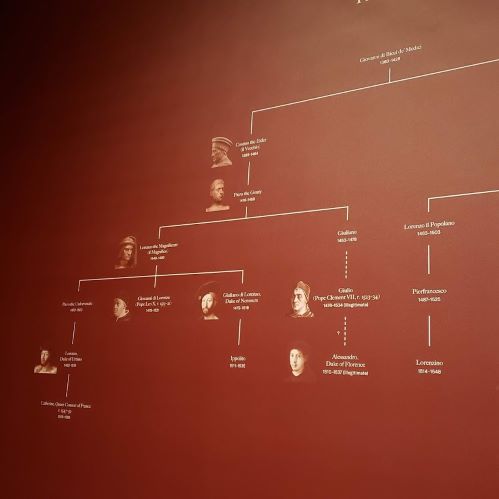
Helpful Medici genealogy and timeline
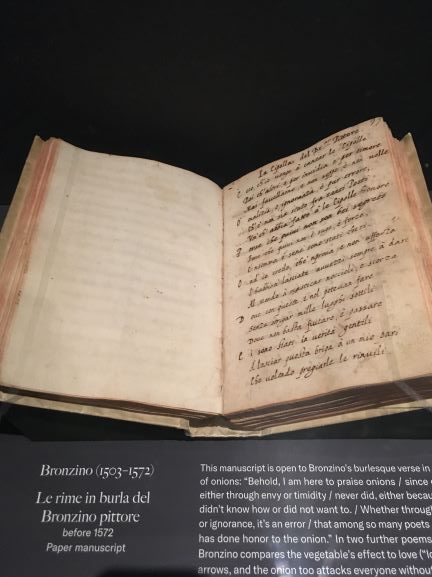
A poet, too, Bronzino hailed the noble onion in verse.
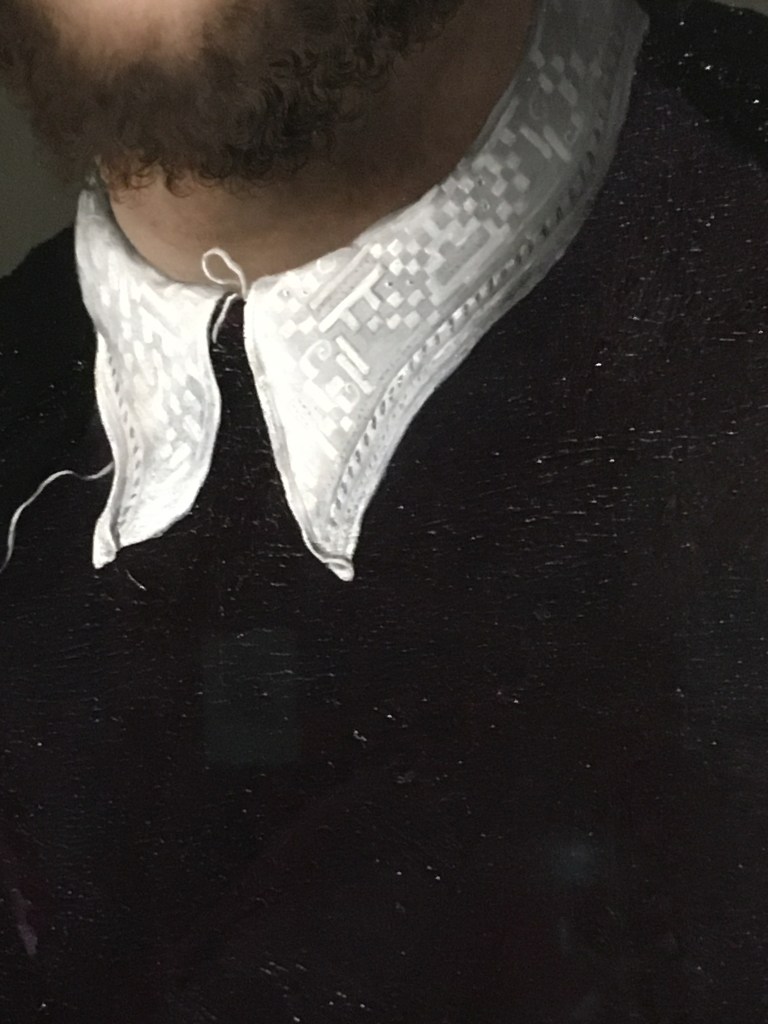
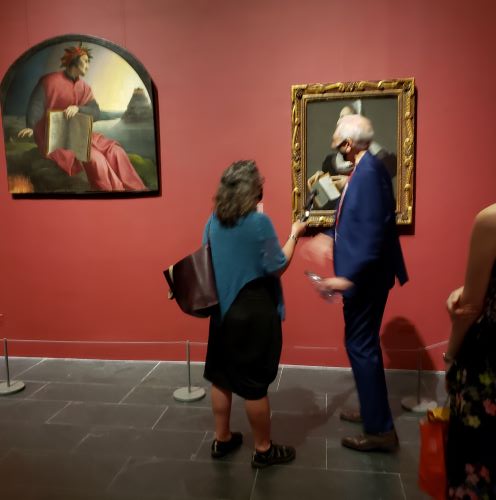
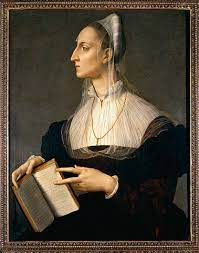
Interviewing co-curator Christiansen before Bronzino’s portrait of the poet Laura Battiferri, below, lent from the Palazzo Vecchio in Florence and cleaned for the exhibition. It’s the work Christiansen was most determined to show.

Shown in profile like the portrait of Dante — both with prominent noses — to her left in the exhibit.

Having bid arrivederci to the Medici, Mari and I took in other Met wonders.
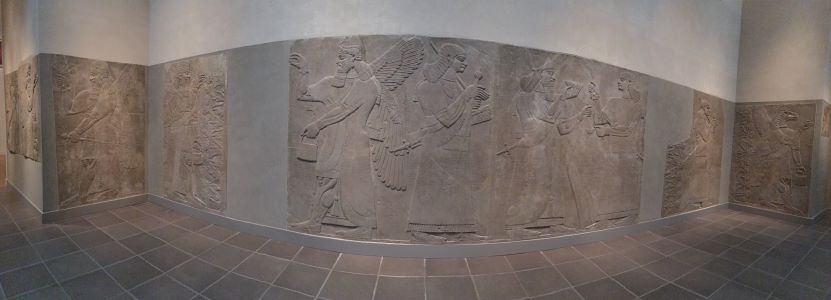
This room of Tell Halaf reliefs from the Ottoman Empire, 10-9 c BC, was especially affecting.

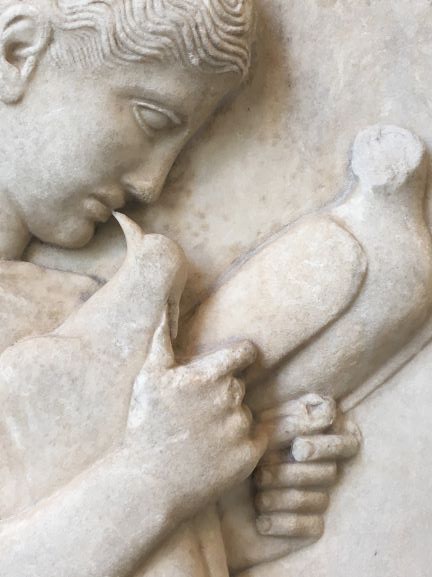
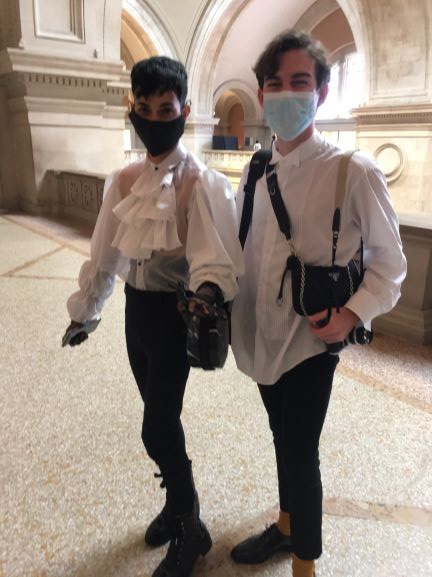
Is one ever too old to appreciate cute boys?
Back at Grand Central, we gathered picnic fixin’s for the train ride home. A great day in the big city!

THANKS TO EVERYONE WHO CONTRIBUTED TO WESU’S SPRING PLEDGE DRIVE! AS YOU SEE, WE MORE THAN MADE OUR GOAL! IT’S YOU WHO PUT THE COMMUNITY IN COMMUNITY RADIO!

Be sure to tune in next time, July 11, for a visit with abstract artist Power Boothe!